
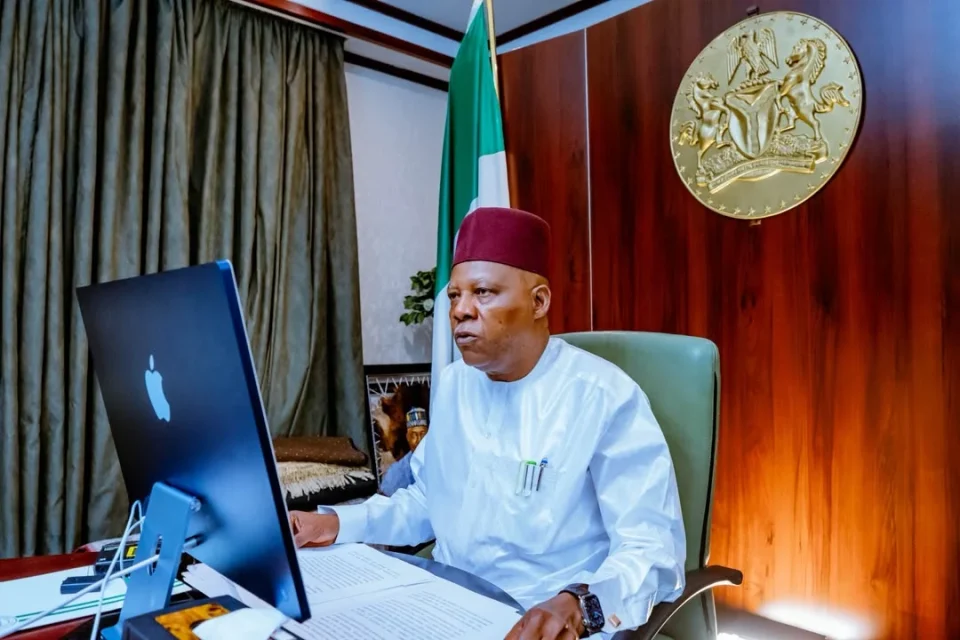

ABUJA — Nigeria’s National Economic Council (NEC) has approved an additional ₦130bn to rehabilitate police training institutions nationwide, raising total funding for the overhaul to ₦230bn as authorities prepare to recruit 50,000 new police personnel.
The decision, reached during the council’s 162nd meeting on Monday, 23 November 2026, follows an update from the NEC Ad-Hoc Committee chaired by Enugu State Governor Peter Mbah, which reported that upgrades across 13 training centres have reached 30% completion.
The committee was established in October 2025 on the recommendation of President Bola Tinubu, and an initial ₦ 100 bn had been allocated. According to a statement by Vice President Kashim Shettima’s media aide, Stanley Nkwocha, the fresh injection will accelerate facility upgrades to handle increased recruitment and training demands.
World Bank projects, economic outlook, and state reforms
Alongside security infrastructure, the council—chaired by Vice President Shettima and comprising state governors and key ministers—endorsed major development financing and reviewed national economic performance:
- World Bank Financing ($850m): Members backed two proposed World Bank-funded initiatives: the six-year, $350m ARISE-Nigeria disaster-preparedness program—initially targeting five to 10 high-risk states with improved early-warning systems and emergency operation centers—and the $500m State-Led Early Childhood Development Programme, which will link primary healthcare with preschool and nutrition hubs across all 36 states and the capital, Abuja, alongside a potential $30m Global Financing Facility grant.
- Growth vs. Living Costs: Finance Minister Taiwo Oyedele reported that real GDP grew by 4.43% in the second quarter of 2026, up from 4.23% a year earlier, while October headline inflation eased for a fifth straight month to 14.06%—its lowest level since September 2020. External reserves stood at $54.87bn as of 12 November, and the first-half trade surplus nearly doubled to ₦20.1tn. However, Oyedele cautioned that 19.13% food inflation, high lending rates, and electricity costs mean households and businesses are yet to feel broad relief.
- Identity & Pension Drives: The council urged state governments to partner with the National Identity Management Commission (NIMC) to expand National Identification Number (NIN) integration into public services, and directed state finance teams to set timelines with the National Pension Commission (PenCom) to adopt the Contributory Pension Scheme.
Addressing the meeting, Vice President Shettima stressed that sustaining President Tinubu’s economic reforms requires strong institutions and federal-state cooperation, adding that disaster-resilience projects must protect vulnerable families and businesses who “have little room to absorb another loss.”

Add Comment