
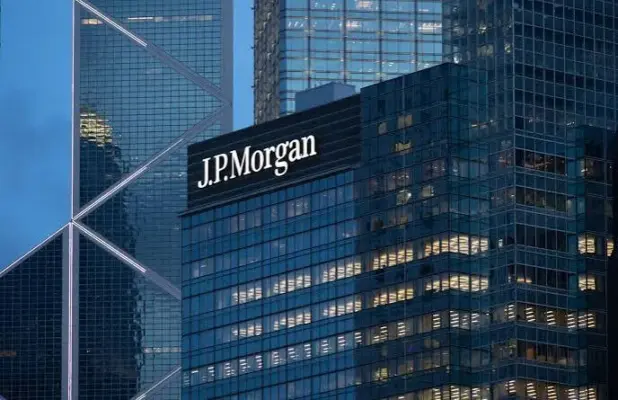

Wall Street giant JP Morgan Chase’s move to secure a full merchant banking licence in Nigeria is set to unlock fresh flows of foreign direct investment into Africa’s largest economy, according to a local policy think tank.
In a policy statement released by its chairman, Omoniyi Akinsiju, the Independent Media and Policy Initiative (IMPI) described the bank’s expansion as a clear endorsement of the economic reforms pursued under President Bola Ahmed Tinubu.
A major shift in corporate finance
The transition of JP Morgan Chase from a representative office to a fully licensed merchant bank marks a significant evolution in West Africa’s financial landscape. The move allows the US bank to offer direct trade finance, corporate lending, cross-border underwriting, and balance-sheet execution.
”A major institutional barrier to FDI in West Africa is the cost of capital and the complexity of structuring project risk,” the think tank noted. It added that JP Morgan’s expanded presence would allow it to underwrite large-scale infrastructure, telecommunications, and industrial projects alongside international consortiums.
Direct access to global capital markets for Nigerian sovereign and corporate issuers is also expected to validate the country’s macroeconomic stability narrative to global pension funds and private equity firms.
Rebound driven by market reforms
The IMPI attributed the improving investment outlook to market corrections initiated in 2023, notably the unification of the foreign exchange market and the removal of petrol subsidies.
While these measures initially spiked inflation and depreciated the naira, the group noted they have successfully re-engineered external balance sheets and restored investor confidence, maintaining consistent current account surpluses.
Transition from hot money to long-term capital
Nigeria’s central bank strategy initially relied on high-yielding Foreign Portfolio Investment (FPI) to clear foreign exchange backlogs and bolster foreign reserves.
However, with foreign reserves now topping $55bn and bond yields moderating in line with the Central Bank of Nigeria’s Monetary Policy Rate, the policy group highlighted a shifting landscape.
As returns on fixed-income securities compress, institutional capital is expected to move away from short-term paper toward long-term physical assets, infrastructure concessions, and corporate projects.




Add Comment