

By Segun Ojumu
African public sector leaders, policymakers, and governance experts gathered in Lagos on Wednesday to address one of the continent’s most persistent governance challenges: bridging the gap between policy design and actual execution.
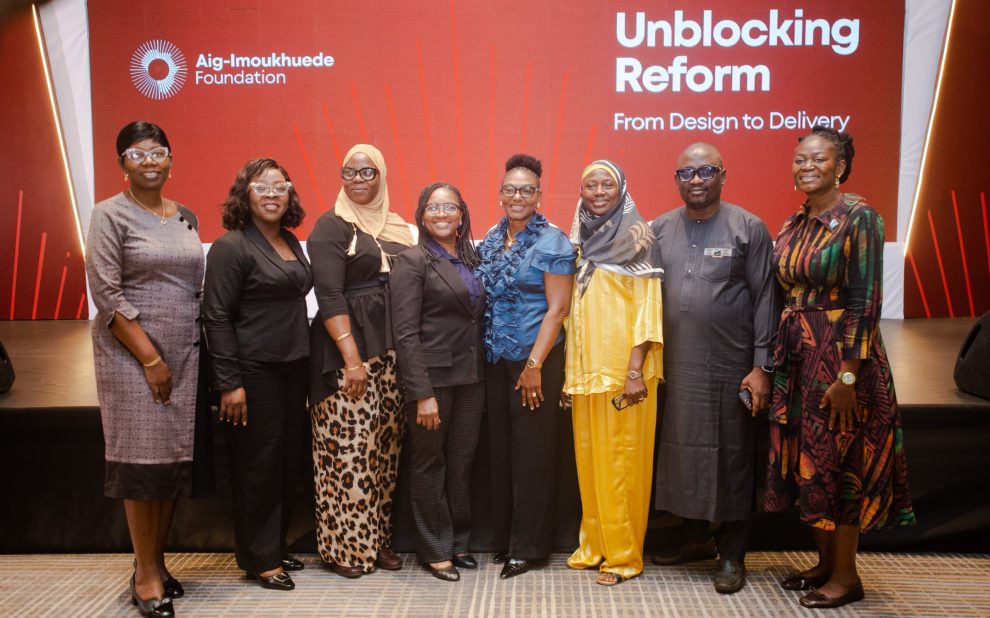
The 2026 Public Sector Reform Convening, organised by the non-profit Aig-Imoukhuede Foundation under the theme “Unblocking Reform: From Design to Delivery,” brought together alumni and stakeholders to examine why well-designed government policies frequently stall during implementation.
According to research presented at the event, successful public sector reform across Africa hinges heavily on effective stakeholder engagement, internal communication, organizational culture, and cross-departmental collaboration.
Speaking at the event, Ofovwe Aig-Imoukhuede, Executive Vice Chair of the foundation, warned against dismissing resistance to public policy changes without understanding its roots.
”This is not to suggest that every objection to reform is unreasonable or that resistance can simply be overcome through better communication,” Mrs. Aig-Imoukhuede told delegates. “Rather, effective reform leadership requires an understanding of institutional contexts, a willingness to listen to those affected, and a deliberate effort to build the support necessary for implementation.”
’Listening to resistance’
The initiative comes as public institutions across the continent face growing pressure to deliver tangible improvements in healthcare, infrastructure, education, and civil administration amidst tightening public budgets.
Beyond instructions
Addressing the gathering, Olabode Shuageeb Agoro, the Head of Service for Lagos State—Nigeria’s commercial hub and most populous city—emphasised that institutional bottlenecks often stem from systemic resource and skill deficits rather than deliberate opposition.
”A capacity gap cannot be resolved by repeating an instruction,” Mr. Agoro said. “Leaders must communicate the purpose of reforms, align institutions around their objectives, provide the resources and capabilities required for implementation, and ensure that accountability continues long after implementation.”
Mr. Agoro added that public servants must feel included in governance changes if reforms are to succeed: “People always feel better if they are carried along. Nobody wants to feel that they don’t matter. So it is always important to engage at all levels.”
During practical sessions, delegates participated in workshops designed to draft adaptable reform frameworks that could be deployed across various African public institutions.
The convener, the Aig-Imoukhuede Foundation, works to strengthen public sector leadership and governance performance across Africa, aiming to turn high-level policy proposals into measurable outcomes for citizens.




Add Comment