
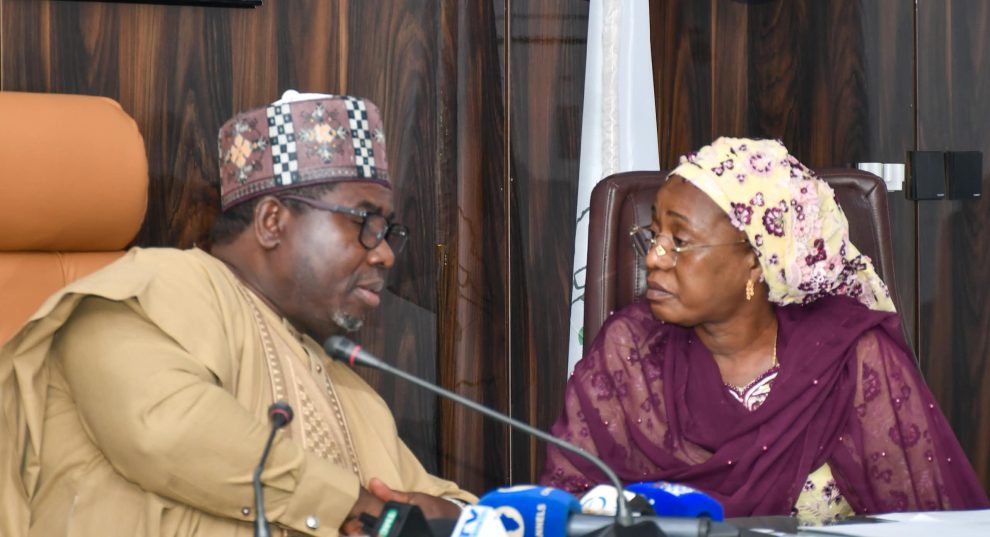

Nigeria’s electoral body has launched a multi-agency committee combining military, security, and transportation chiefs to safeguard supply chains and prevent voting delays during the country’s upcoming general elections in 2027.
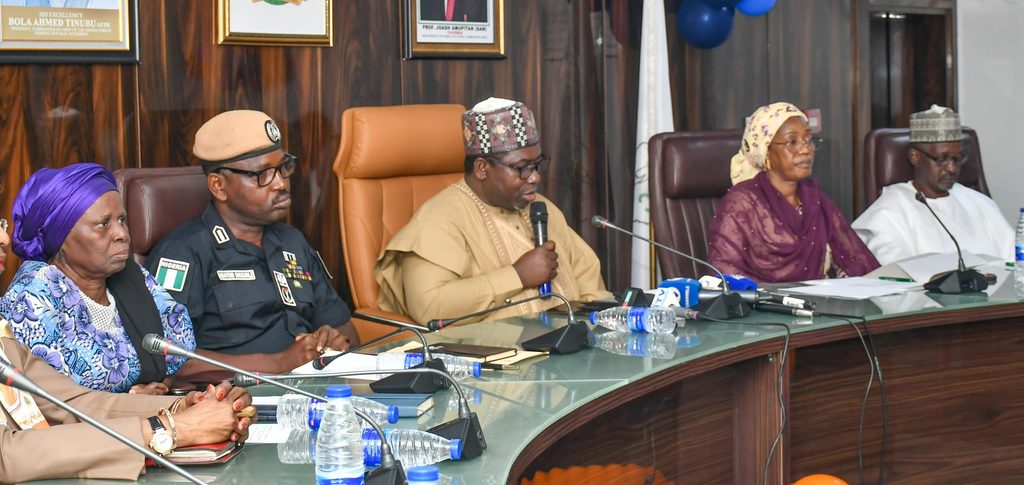
The Independent National Electoral Commission (INEC) inaugurated the Electoral Logistics Committee (ELOC) in the capital, Abuja, on Thursday.
Delays in delivering sensitive ballot papers and electronic voting equipment have historically plagued elections in Africa’s most populous democracy, where voting materials must be transported across vast, varied, and frequently insecure terrain.
Speaking at the launch, INEC Chairman Prof. Joash Amupitan emphasized that early planning was critical to ensuring democratic credibility across Nigeria’s 176,846 polling stations.
”Election logistics involve the intricate movement of both sensitive and non-sensitive materials by land, sea, and air. It requires precision, security, and timeliness,” Prof. Amupitan said. “No Nigerian must be disenfranchised due to the late arrival of materials.”
The newly formed committee is headed by retired Navy Rear Admiral Jamila Malafa, a national electoral commissioner, and includes representatives from the military, police, civil aviation authorities, customs, and transport unions.
Nigeria’s election commission currently registers more than 103 million eligible voters. Organizing elections across the country presents severe logistically demanding conditions—ranging from the mangrove creeks of the southern Niger Delta to conflict-affected regions in the northern plains.
Retired Admiral Malafa said the panel’s immediate priority would be mapping supply bottlenecks, securing airlift capacity, and setting up tailored security convoys for high-risk zones.
Electoral Chief Warns of “Three Anti-Democratic Forces” Threatening Nigeria’s Next Polls
In a separate development, the Chairman of the Independent National Electoral Commission has warned that voter apathy, vote-buying, and political violence pose grave threats to the country’s democratic integrity ahead of nationwide elections.
Prof. Joash Amupitan made the comments in Abuja during the launch of a national voter education campaign organized in partnership with the National Orientation Agency (NOA).
The campaign will deploy civic education officers across Nigeria’s 774 local government areas to encourage voter turnout and discourage cash-for-votes schemes, which have marred recent state and national polls.
”The success of the election depends heavily on defeating three destructive anti-democratic forces: voter apathy, vote buying, and electoral violence,” Prof. Amupitan told civil society groups, security officials, and political representatives.
Addressing widespread public cynicism, the electoral chief promised that technological safeguards—including biometric voter accreditation systems (BVAS) and real-time online result portals (IReV)—would ensure all votes are accurately recorded.
He also cautioned against emerging digital threats, specifically calling out AI-generated “deepfakes” designed to stir ethnic and religious tension during political campaigns.
The Director-General of the NOA, Mallam Lanre Issa-Onilu, confirmed that field officers would conduct non-partisan outreach in local languages through community halls, places of worship, radio broadcasts, and digital platforms.
Nigeria’s next general election will mark nearly three decades of unbroken civilian rule since the country returned to democracy in 1999.


Add Comment