
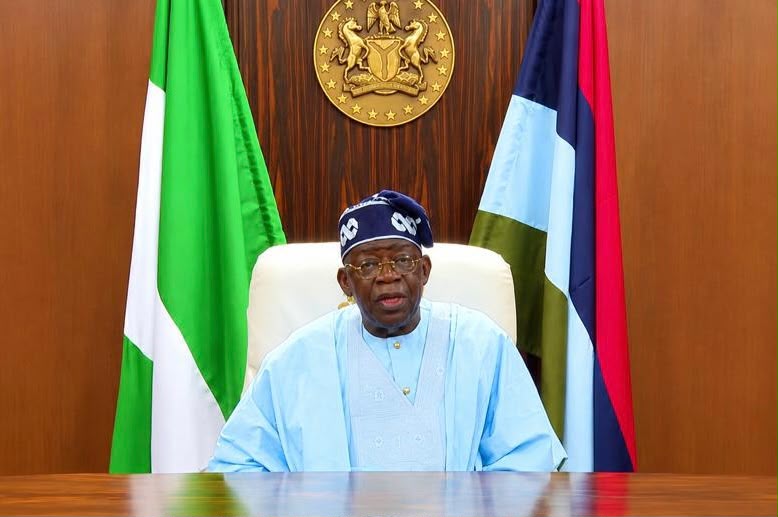

Nigerian President Bola Tinubu has promised to prioritize reducing the high cost of living for millions of citizens, declaring that three years of tough structural reforms have successfully stabilized Africa’s largest economy and laid the foundation for shared national prosperity.
In a major nationwide broadcast delivered from the presidential villa in Abuja on Thursday to mark Nigeria’s 66th Independence Anniversary, President Tinubu offered a frank assessment of the country’s economic journey, robustly defending the controversial policy choices made since taking office in 2023.
Comparing Nigeria’s pre-2023 economic crisis to a patient suffering from cancer, the president argued that previous administrations had relied on short-term “morphine”—such as unsustainable fuel and foreign exchange subsidies—while allowing structural decay to deepen. He maintained that his government chose to “excise the cancer,” acknowledging that while the resulting austerity measures produced painful side effects for households, abandoning the reforms now would prove disastrous.
President Tinubu insisted that the period of emergency economic stabilization is now complete, asserting that Nigeria has turned a critical financial corner and is transitioning from an era of painful adjustments to an “age of prosperity.”
Key policy initiatives and economic benchmarks highlighted in the president’s address include:
- Tackling High Food and Living Costs: The administration pledged to lower prices at local markets by directly cutting the cost of agricultural production and freight transport. Strategy pillars include expanding large-scale mechanized irrigation, boosting dry-season farming, improving local access to high-yield seeds and fertilizers, and accelerating construction on key freight railways and road networks connecting rural agricultural hubs to urban consumer centers.
- Macroeconomic Recovery Metrics: Citing independent economic assessments, President Tinubu highlighted that Nigeria’s gross domestic product (GDP) grew by over 4% in 2026. He noted that boosted security operations in the Niger Delta have significantly curtailed crude oil theft, while non-oil export revenues reached a record high of more than $6 billion in 2025. Foreign exchange markets have stabilized, and national external reserves have been substantially rebuilt.
- Expanded Social Safety Nets & Consumer Credit: To cushion lower-income families against immediate hardship, the federal government is expanding direct cash transfers via a refined National Social Register. The president also highlighted the ongoing deployment of student tuition loans through the Nigerian Education Loan Fund (NELFUND) and consumer financing options through CREDICORP, enabling working citizens to purchase essential assets such as solar energy systems, electronics, and vehicles without years of upfront savings.
- Industrial Revitalization & Youth Enterprise: The president outlined plans to leverage domestic natural gas reserves to power revitalized industrial corridors across the country, expanding high-speed digital connectivity into underserved communities to enable young entrepreneurs to build competitive technology enterprises and create domestic jobs.
Addressing critics who have called for a reversal of market-based reforms, President Tinubu urged citizens to remain steadfast, maintaining that the sacrifices endured over the past three years have successfully corrected Nigeria’s fiscal course and positioned the nation for sustained, long-term economic growth.



Add Comment