
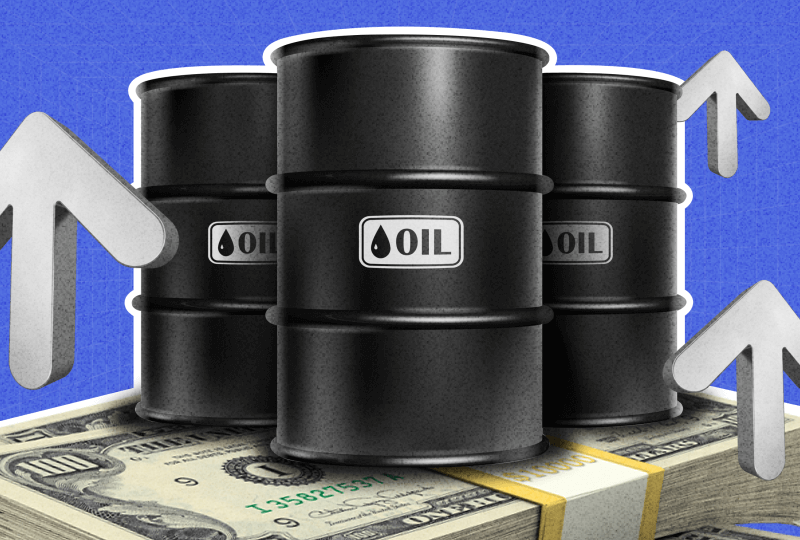

Oil prices have fallen sharply, and global stock markets have rallied after the United States and Iran announced a deal to end their three-month war and reopen the Strait of Hormuz.
The breakthrough, brokered by Pakistan, will see a formal signing ceremony take place in Switzerland on 19 June.
The agreement brings an end to a conflict that threatened global energy security and revived fears of a fresh spike in inflation.
The Strait of Hormuz is one of the world’s most critical maritime chokepoints, handling roughly 20% of global crude oil supply. Tehran effectively closed the shipping lane shortly after US-Israeli air strikes on Iran triggered the war.
US President Donald Trump announced the breakthrough on social media on Sunday, writing, “The deal with the Islamic Republic of Iran is now complete.”
Mr. Trump, who was marking his 80th birthday, added, “I hereby fully authorise the toll-free opening of the Strait of Hormuz. Ships of the World, start your engines. Let the oil flow!”
Iran’s Deputy Foreign Minister, Kazem Gharibabadi, confirmed the hostilities had come to an “immediate end”, with further talks aimed at a “final agreement” scheduled to take place within the next two months.
The exact details of the text remain unclear following weeks of tense negotiations, which were frequently punctuated by threats of further military action from the US president.
Inflation fears ease
Global energy markets reacted immediately. Brent crude and West Texas Intermediate (WTI) both saw sharp losses, with WTI dropping more than 5% toward $83.30 a barrel on Monday.
Prices had surged past $110 a barrel in the opening days of the conflict but have steadily declined as prospects of a diplomatic resolution improved.
The drop in oil prices has alleviated growing fears on trading floors that stubborn inflation could force major central banks into a new round of interest rate hikes.
US economic data released last week showed a jump in consumer prices for May alongside strong job creation, prompting traders to bet that the Federal Reserve would tighten monetary policy before the end of the year.
“Oil down takes the inflation impulse down,” said Stephen Innes, an analyst at SPI Asset Management. “Lower inflation risk takes some of the Fed-hike premium out of the curve… the market moves from bunker pricing to reopening pricing.”
However, analysts urged a degree of caution. Michael Wan, an economist at MUFG, warned that the long-term viability of the agreement “depends, among other things, on the details of the negotiated terms”.
Traders are also monitoring the next practical steps, including naval mine clearance in the Gulf and the reaction of Israel.
Market rally
Shares in Asia led a broad global market recovery. In Tokyo, the Nikkei 225 index closed 5% higher, a rise mirrored by the Kospi in Seoul.
Technology shares were the primary drivers, supported by investor enthusiasm following last week’s record-breaking $75bn (£59bn) stock market flotation of Elon Musk’s SpaceX.
Markets in Shanghai, Sydney, Singapore, and Taipei all gained more than 1%, while Hong Kong’s Hang Seng index crept up 0.7%.
In Europe, the FTSE 100 in London opened 0.8% higher, with similar gains recorded on the stock exchanges in Paris and Frankfurt.
Emerging markets also experienced a relief rally. In Jakarta, the main stock index jumped more than 4% as the Indonesian rupiah strengthened to 17,700 against the US dollar—its strongest level since late May, recovering from a record low of 18,209 hit earlier this month.
Key market figures at 07:30 GMT:
- West Texas Intermediate crude: Down 5.3% at $83.26 a barrel
- Tokyo – Nikkei 225: Up 5.0% at 69,317.50 (close)
- London – FTSE 100: Up 0.8% at 10,553.76
- New York – Dow Jones: Up 0.7% at 51,202.26 (Friday close)
- Dollar-Yen: Down at 160.06 yen



Add Comment