


The Nigerian military has issued a stinging rebuttal to claims that it is arming former Boko Haram insurgents to fight alongside government troops, describing a viral video making the allegations as “entirely unfounded.”
The statement from Operation Safe Corridor (OPSC)—the federal programme designed to de-radicalise and reintegrate former militants—comes after a Danish blogger, identified as Jones Raw, circulated footage purportedly showing “repentant” terrorists being re-armed for combat.
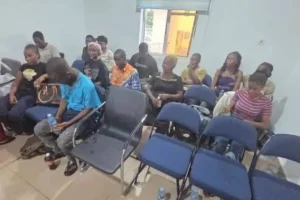
Brigadier General Y. Ali, the coordinator of the programme, insisted on Tuesday that the facility shown in the video was not an official federal camp and that the individuals featured have never been granted access to the programme’s high-security site in Gombe State.
The ‘Non-Kinetic’ Firewall
The military has sought to clarify the distinction between federal initiatives and independent, state-led programmes that operate without the supervision of the Defence Headquarters.
Official Clarifications from Operation Safe Corridor:
- Strictly Non-Combatant: The military maintains that participants are never armed, mobilised, or deployed for any form of combat operations.
- Gombe Facility: The only officially designated federal de-radicalisation camp is located in Mallam Sidi, Gombe State, which operates as a “secured and controlled military environment.”
- Screening Process: Participants undergo a multi-agency screening and profiling process before being handed over to state authorities for long-term monitoring.
Analysis: A Fight for Public Trust
For the Nigerian military, Operation Safe Corridor is a vital “non-kinetic” weapon—a tool to shrink the pool of fighters available to Boko Haram and ISWAP by encouraging voluntary surrender. However, the programme has long been a lightning rod for controversy, with many Nigerians expressing fear that “repentant” fighters might return to the battlefield or be secretly used as government proxies.
By inviting the Danish blogger and other observers to visit the Gombe facility for an “independently verified” tour, the military is attempting to project a level of transparency rarely seen in Nigeria’s decade-long conflict. The mention of the European Union as a supporting partner is also a strategic move; it signals to the international community that the programme adheres to global human rights standards, even as local suspicion remains high.
International Scrutiny
The military noted that Denmark, the home country of the blogger, is a member of the European Union—a body that provides significant support to Nigeria’s de-radicalisation efforts. The statement suggests that the circulated claims not only undermine national security but also threaten the “public confidence” required for long-term national stability.
As the North-East theatre of operations remains volatile, the Nigerian government is keen to ensure that its “surrender-and-reintegrate” strategy is not derailed by what it calls “false narratives.”


Add Comment