

Nigeria’s top anti-corruption official has hailed a new United Nations programme aimed at dismantling the criminal networks that drain billions of dollars from the country every year.
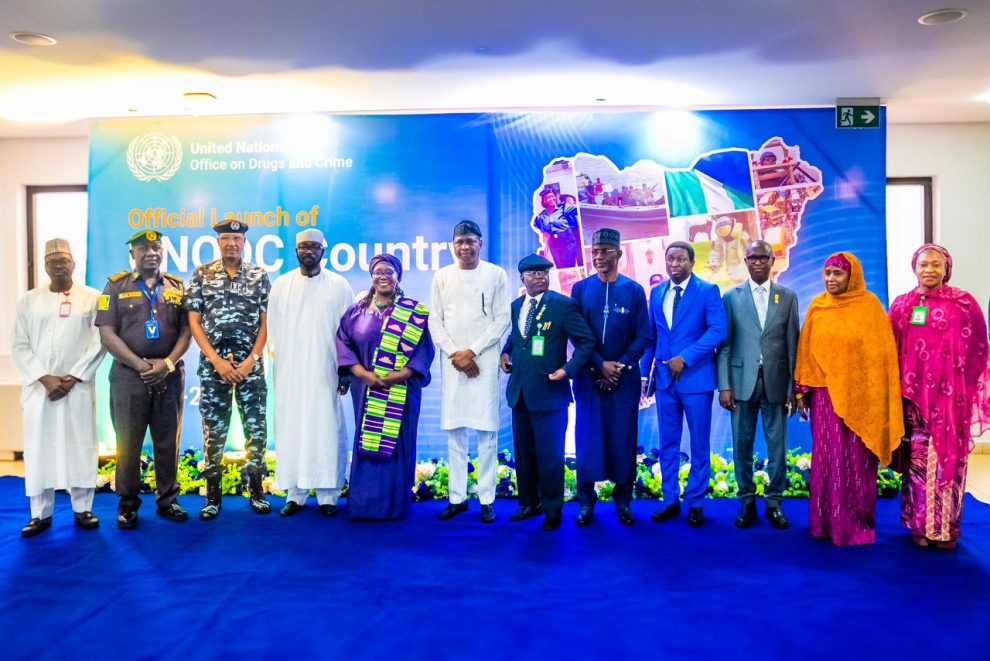
Ola Olukoyede, the Executive Chairman of the Economic and Financial Crimes Commission (EFCC), gave his backing to the UN Office on Drugs and Crime (UNODC) “Country Programme for Nigeria 2026-2030” at a high-level launch in Abuja on Friday.
The five-year strategy marks a significant escalation in the fight against transnational organised crime, with a specific focus on “illicit financial flows”—the secretive movement of money across borders to hide the proceeds of corruption, tax evasion, and theft.
‘Alarming speed’
Mr. Olukoyede warned that criminal networks are increasingly exploiting advances in technology and gaps in global governance to move stolen assets across jurisdictions with “alarming speed.”
“Corruption continues to impose enormous economic and social costs on our country,” the EFCC boss said, stressing that the new UN programme’s focus on data-driven approaches and inter-agency collaboration is “particularly significant” for Nigeria’s stability.
The launch drew a “who’s who” of Nigeria’s security and judicial establishment, including leaders from the National Drug Law Enforcement Agency (NDLEA), the Nigeria Police Force, and the Independent Corrupt Practices Commission (ICPC).
A regional ‘powerhouse’
The UNODC described the programme as a strategic necessity, citing Nigeria’s status as Africa’s largest economy and its projected population of 400 million by 2050. The UN agency believes that if Nigeria can successfully curb its internal corruption, it has the potential to drive “positive regional change” across the entire West African sub-region.
The new framework will focus on four key areas over the next half-decade:
- Cyber-enabled offences: Tackling the rise in sophisticated digital fraud.
- Terrorism financing: Cutting off the lifelines of insurgent groups in the north.
- Capacity development: Training a new generation of investigators and judges.
- Inter-agency cooperation: Breaking down the “silos” between different Nigerian security departments.
Analysis: The transparency test
For the EFCC, the UN partnership provides much-needed international “heft” at a time when Nigeria is under pressure from global financial watchdogs to improve its anti-money laundering credentials.
While the rhetoric in Abuja was one of optimism, the true test of the 2026-2030 programme will be whether it can translate high-level diplomatic “goodwill” into successful prosecutions and the actual recovery of assets hidden in foreign bank accounts.

Add Comment