
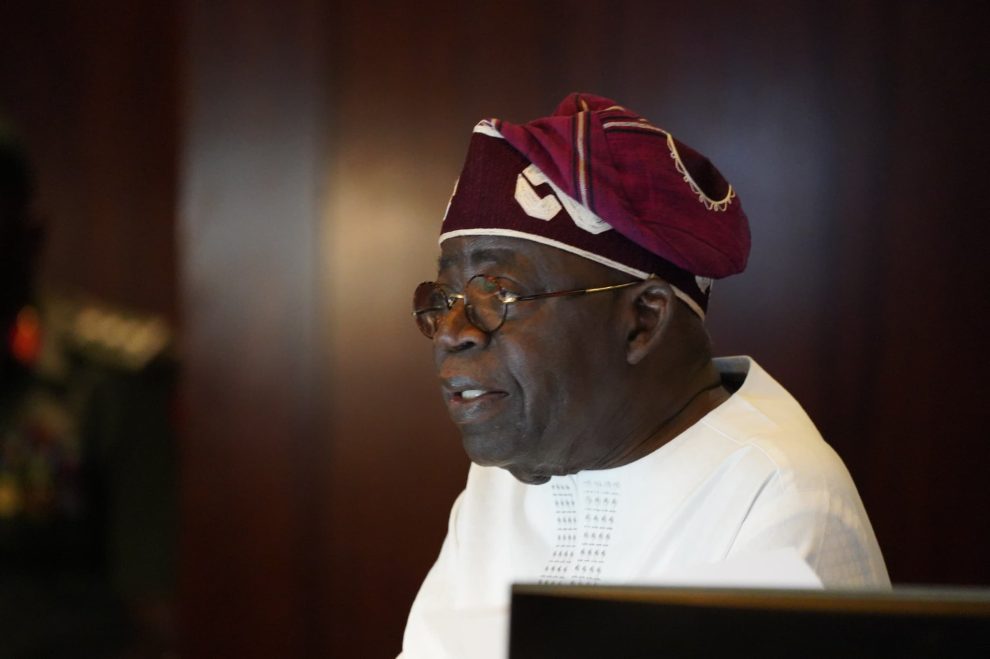

President Bola Ahmed Tinubu has promised Nigerians a “more prosperous” year ahead, declaring that 2026 will mark a shift into a high-growth phase for Africa’s largest economy.
In a New Year’s Day televised address, Mr Tinubu defended his administration’s “difficult but necessary” economic reforms, which he claimed have finally turned a corner after a turbulent 2025.
The President set out an ambitious agenda to further slash inflation, build record foreign reserves, and expand a controversial tax harmonisation plan across the country.
Economic ‘fiscal reset’
President Tinubu argued that the “fiscal reset” achieved over the last year has laid a foundation for stability. He highlighted several key economic markers as evidence of progress:
- Growth: Annualised GDP growth is expected to exceed 4% for 2025.
- Inflation: The President claimed inflation has declined steadily to below 15%, meeting government targets.
- Reserves: Foreign reserves stood at $45.4bn (£35.7bn) as of 29 December, providing a significant “buffer” for the Naira.
- Investment: Foreign Direct Investment (FDI) reportedly surged to $720m in the third quarter of 2025, up from just $90m in the previous quarter.
Mr Tinubu also pointed to the Nigerian Stock Exchange’s 48% gain in 2025 as a sign of “renewed investor confidence” backed by global rating agencies such as Moody’s and Fitch.
Tax and grassroots empowerment
A central pillar of the 2026 plan is the implementation of new tax laws designed to end the “excessive burden” of multiple levies. The President commended states that have already aligned with the national tax harmonisation agenda.
He also announced an acceleration of the “Renewed Hope Ward Development Programme.” The initiative aims to bring 10 million Nigerians into productive economic activity by empowering 1,000 people in each of the country’s 8,809 wards through agriculture, mining, and trade.
Security and international strikes
Addressing the persistent threat of terrorism and banditry, the President revealed that the Nigerian military had carried out “decisive actions” alongside international partners, including the United States.
He disclosed that air strikes were conducted against terrorist targets in the north-west on 24 December.
Mr Tinubu reiterated his support for a decentralised policing system, arguing that a shift toward local law enforcement and regulated “forest guards” is critical to eliminating criminal strongholds in the North-west and North-east.
A ‘shared responsibility’
The President concluded by calling for national unity, describing nation-building as a “shared responsibility.”
“We must stand together in unity and purpose,” he said. “Let us resolve to be better citizens, better neighbours, and better stewards of our nation.”
While the President’s tone was optimistic, many Nigerians continue to struggle with the high cost of living triggered by the removal of fuel subsidies and the floating of the Naira earlier in his term. Whether the “concrete results” promised for 2026 reach ordinary households remains the ultimate test for his administration.

Add Comment