

Artificial intelligence and algorithms will not be allowed to decide Nigeria’s upcoming general elections, the head of the country’s electoral commission has pledged.
Speaking in the capital, Abuja, Prof. Joash Amupitan, chairman of the Independent National Electoral Commission (INEC), insisted that the ultimate choice of Nigeria’s next leaders would remain strictly in the hands of human voters. The warning comes as election officials in Africa’s most populous democracy grapple with the rapid rise of generative AI, sophisticated deepfakes, and automated disinformation campaigns.
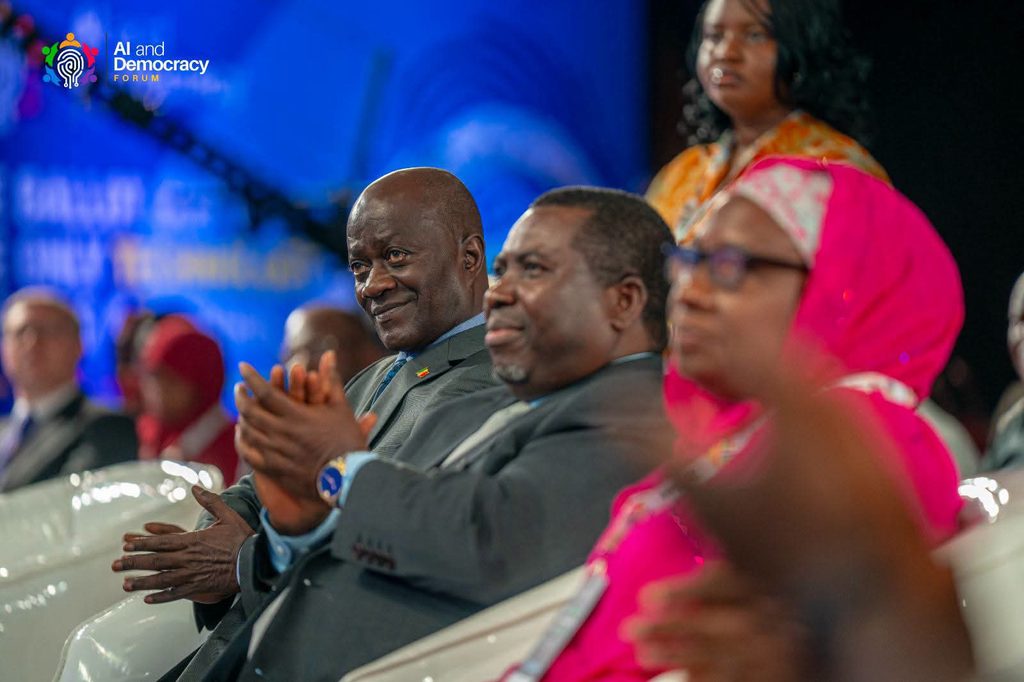
Addressing delegates at the Artificial Intelligence and Democracy Forum, organized alongside civil society group Yiaga Africa, Prof Amupitan said the commission was taking robust steps to safeguard the democratic process. “Algorithms will not, and must never, decide the 2027 vote,” he told the conference, taking place exactly three months before citizens head to the polls.’
Hacking the voter’s mind
The electoral chief cautioned that while technology offers operational advantages, the threats posed by synthetic media are unprecedented.”The greatest threat we face is not the hacking of a ballot box, but the hacking of the voter’s mind,” Prof. Amupitan said. He highlighted risks including near-zero production costs for ultra-realistic fake videos or audio recordings. Such deepfakes could be weaponized to falsely announce candidate withdrawals, issue fake voting instructions, or broadcast inflammatory statements designed to stir ethnic and religious tensions. To counter the threat, INEC has established a dedicated AI Unit within its technical department, equipped with real-time digital monitoring and deepfake detection software.
Crucially, the commission affirmed a zero-automation policy for key democratic milestones. No critical decision—including result collation, voter accreditation, or candidate qualification—will be delegated to an autonomous AI system.
Leveraging tech for logistics
Despite the focus on security threats, the electoral body noted that AI is also being deployed as a tool to improve efficiency across Nigeria’s vast landscape.With over 103 million registered voters spread across 774 local government areas, the 2027 election is set to be the largest democratic exercise on the African continent.
INEC plans to use geospatial tools and predictive analytics to optimize routes for delivering sensitive election materials and personnel to more than 176,000 polling stations, factoring in traffic, weather, and security risks. Automated systems are also being used to clean up the national register by detecting duplicate entries. Prof. Amupitan called on global tech giants—including Meta, X, Google, TikTok, and Telegram—to actively curb the spread of unlabelled synthetic media and restrict discriminatory ad-targeting. Political parties were also urged to sign an ethical code of conduct renouncing the use of deepfakes and botnets. “Algorithms have no moral compass, no civic duty, and no constitutional oath,” Prof Amupitan added. “On election day in 2027, it will be the thumbprint of the Nigerian citizen… that decides our future.”




Add Comment