
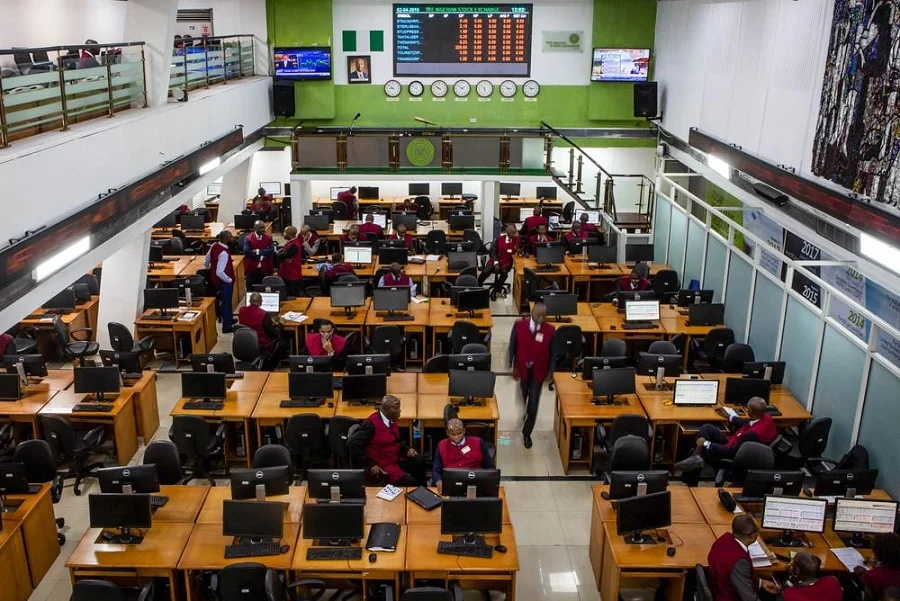

Nigerian equities closed August on a mixed note, with the benchmark NGX All-Share Index (ASI) dipping 0.44% over the month, despite a late-session rally that preserved most of the market’s strong year-to-date gains.
The ASI closed at 244,199.39 points, recovering from a mid-month low of 238,682.92 points following an 11-session losing streak. Total market capitalization settled at ₦157.74 tn, representing a modest decline of roughly ₦590 bn (0.37%) over the month.
Despite the headline dip, the market remains up 56.93% year-to-date, driven by strong buying interest in banking and consumer goods equities during the final trading sessions.
Sector Rotation and Top Performers
August trading was marked by notable sector rotation, as investors shifted capital away from insurance and industrial goods toward value-oriented and banking stocks:
- Banking & Consumer Goods Lead: The NGX Banking Index rose 3.82% to close at 2,624.05 points, making it the month’s strongest-performing sector, while Consumer Goods gained 3.47%.
- Insurance & Industrials Drag: The Insurance Index fell 9.26%—the sharpest decline of any sector—while industrial goods shed 2.03%.
- Major Gainers: Real estate firm Haldane McCall topped the gainers’ chart with a 37.46% surge, followed by Access Holdings (+22.05%). Heavyweight blue-chip stocks including Airtel Africa (+8.59%), Seplat Energy (+8.42%), and First HoldCo (+8.21%) provided significant support to the late-month recovery.
- Major Losers: Zichis Agro Allied led the decliners with a 40.73% drop, while consumer goods manufacturer Unilever Nigeria shed 22.95%.
Trading volume surged on the final day of August, with the value of transactions rising nearly 30% to ₦38.66bn across 53,364 deals, as advancing stocks outnumbered decliners by 43 to 17.
Frontier Market Reclassification Ahead
According to the Nigerian Exchange (NGX), domestic retail and institutional investors continue to drive market activity, accounting for approximately 90% of overall transaction value.
Market analysts expect trading activity to gain momentum in September, buoyed by FTSE Russell’s decision to restore Nigeria to its Frontier Market status effective 21 September 2026 following improvements in market infrastructure and settlement frameworks.



Add Comment