
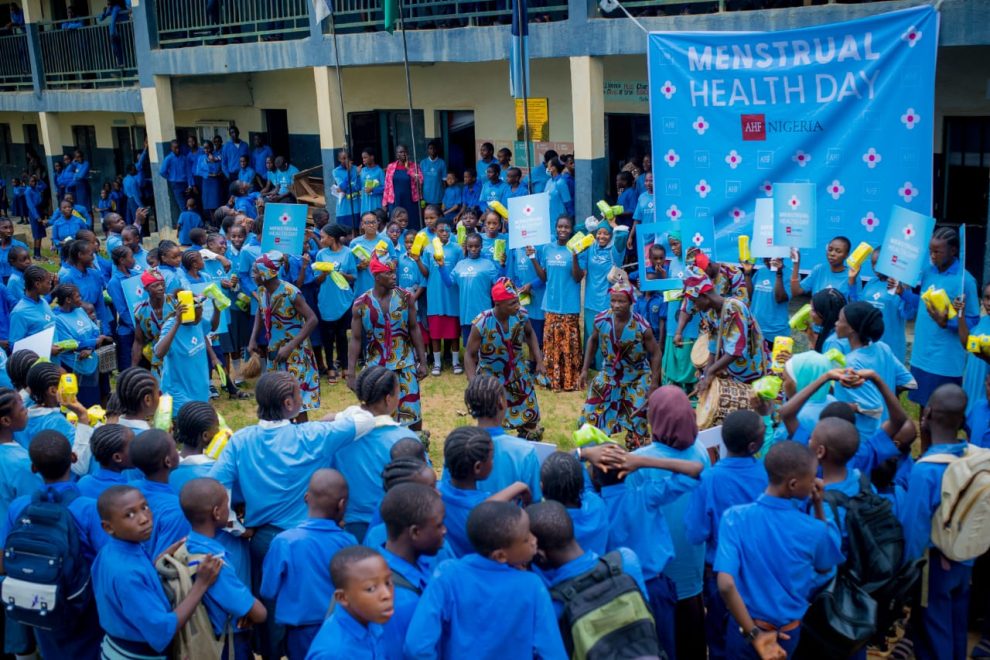

Activists and officials in central Nigeria are calling for urgent action to dismantle the “silent crisis” of menstrual stigma and period poverty affecting millions of young women.
At a major summit in Keffi, Nasarawa State, to mark World Menstrual Health Day, the AIDS Healthcare Foundation (AHF) Nigeria and local government leaders warned that cultural taboos and the soaring cost of sanitary products are forcing girls out of classrooms and damaging their health. Global figures highlight the scale of the challenge, with AHF estimating that nearly 500 million women and girls globally lack access to adequate menstrual products and basic hygiene facilities.
Breaking the Silence
For many young women in Nigeria, menstruation remains a deeply misunderstood and heavily stigmatised topic.”We have a massive amount of work to do in changing harmful norms and perceptions around menstruation,” said Halima Omaku, a gender specialist with the Nasarawa State Ministry of Women Affairs and Humanitarian Services. Reflecting on her own upbringing, Ms Omaku noted how little the conversation had progressed over the generations, leaving young girls to navigate puberty in isolation.”This programme provides education on issues many people still struggle to discuss openly. In our time, we didn’t have this opportunity.” She also stressed that tackling the issue requires a cultural shift that includes men and boys. “We need to educate boys so they can support girls, rather than teasing or alienating them,” she added.
The Reality in Classrooms
The economic realities of modern Nigeria have made commercial sanitary pads a luxury for many families, driving a phenomenon known as “period poverty.”To combat this, local education officials are looking toward sustainable alternatives. Angelina Kigbu, from the Keffi Education Area Office, announced plans to launch school clubs dedicated to teaching girls how to produce their own reusable sanitary pads.”Reusable pads are cheaper and far more sustainable for students who simply cannot afford disposable products,” Ms. Kigbu said. “Most girls have no idea this is even an option.”
A Call for Basic Dignity
For the students attending the summit, the issue is not just about education, but infrastructure. Many schools across Sub-Saharan Africa lack running water, private toilets, or waste disposal systems, making it nearly impossible for girls to manage their periods safely at school.”The sessions taught us proper hygiene, but the government needs to provide clean toilets and sanitary pads in our schools,” said 15-year-old student Victoria Samson. Another student, Catherine Ogogi, 16, urged authorities to dispel deep-rooted myths and provide emergency sanitary supplies in classrooms so girls do not have to skip school during their cycles. Health experts warn that poor menstrual hygiene can lead to severe reproductive tract infections. Dr. Sunday Emmanuel, a clinician with AHF Nigeria, argued that isolated charity events are no longer enough. He called on the government to institutionalise menstrual health education through the media and school curriculums.




Add Comment