
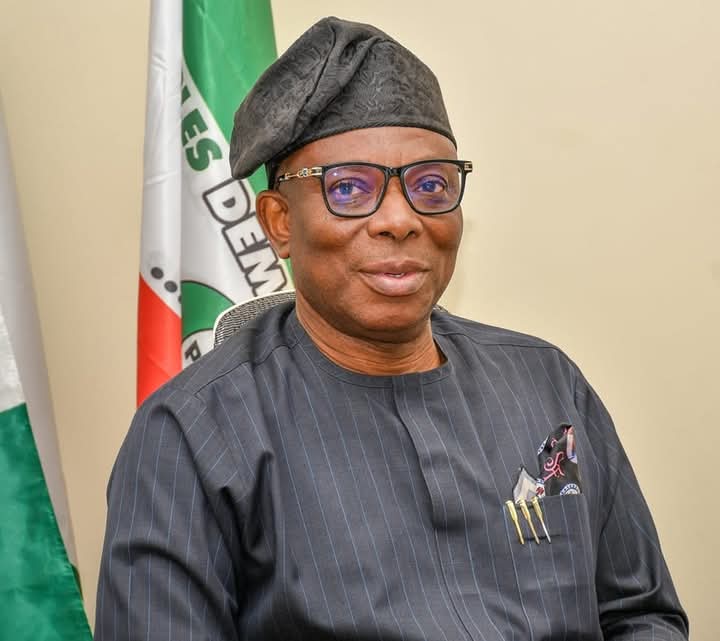

ABUJA, Nigeria — A Nigerian representative to the ECOWAS Parliament has launched a scathing attack on his fellow lawmakers, accusing them of concealing the reality of political instability and human rights abuses in their respective countries.
Honourable Awaji-Inombek Abiante sparked a heated debate on the third day of the First Ordinary Session in Abuja, following the presentation of country reports from Liberia, Sierra Leone, and Senegal on Wednesday.
‘This is Not a Church’
Mr. Abiante rejected what he described as the “whitewashing” of domestic issues, arguing that the lack of transparency undermines the democratic goals of the West African bloc.
“People cannot come here to whitewash the situations in their countries,” he told the chamber. Reacting to the applause of other members, he added sarcastically: “Of what use is it to shield the reality? What are you clapping for? This is not a church. I don’t belong to this class.”
Criticism of Senegal and Border Disputes
The Nigerian lawmaker was particularly critical of the Senegalese delegation, describing their report as “ambiguous and opaque” regarding arbitrary arrests. He suggested the report reflected a system where the right to due process is routinely ignored.
He further lambasted the delegations of Liberia and Sierra Leone for failing to provide updates on their ongoing border disputes with Guinea. Mr. Abiante argued that downplaying an issue with the “proclivity of causing war” was a dangerous oversight.
He specifically questioned the Liberian House of Representatives over the expulsion of MP Yekeh Koluba, who was reportedly removed for suggesting that a disputed piece of land in Lofa County actually belongs to Guinea. “Why should a House of Representatives expel an MP for speaking the truth?” he asked.
Analysis: The Conflict of Self-Reporting
The heated exchange in Abuja exposes a long-standing structural flaw within the ECOWAS Parliament: the reliability of its country reports.
In practice, the delegations tasked with drafting and presenting these national assessments comprise sitting MPs, many of whom belong to the ruling parties of their home countries. For these politicians, presenting a report that openly criticises their own government’s record on human rights or border security is politically risky and, therefore, highly unlikely.
Instead, reports often lean toward diplomatic safe-ground and economic optimism, glossing over systemic domestic failures.
If the ECOWAS Parliament is to be taken seriously as a watchdog for regional democracy rather than a mere talking shop, observers say this culture of self-censorship must change. For these reports to carry any real weight, parliamentarians will need to find a way to prioritise objective, independent oversight over domestic party loyalty.
Delegations Respond
In response to the accusations during Wednesday’s plenary:
- Liberia: Head of Delegation Senator Melvin Snowe admitted that the failure to mention the border dispute was an “oversight” due to his late arrival. He clarified that he did not personally support the expulsion of Mr Koluba, citing the importance of free speech.
- Sierra Leone: A member of the delegation defended the omission, arguing that not dwelling on the dispute was a sign of “maturity and integration” within the spirit of ECOWAS.

Add Comment