
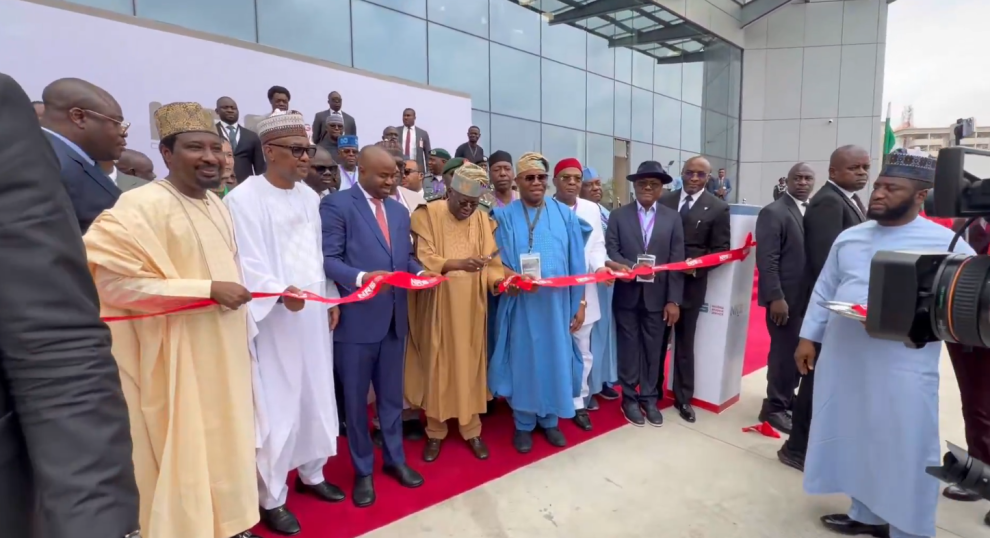

President Bola Tinubu has inaugurated the new headquarters of the Nigeria Revenue Service (NRS) in Abuja, calling on the agency to act as a symbol of “trust and fairness” as the nation navigates a high-stakes transition in its tax laws.
The unveiling of the modern three-tower complex—designed to house over 3,000 personnel—marks the formal rebranding of the agency formerly known as the Federal Inland Revenue Service (FIRS). The transformation follows the implementation of the Nigeria Tax Act 2025, a landmark piece of legislation that has centralised revenue collection and expanded the agency’s mandate to include non-tax revenue and global compliance.
Speaking at the ceremony on Tuesday, President Tinubu told officials that the service must “earn the confidence of Nigerians at home and respect abroad” through transparent administration.
A New Era for ‘NRS’
The shift from FIRS to NRS is more than a name change; it represents a consolidation of fiscal power. Under the new reforms, which sparked intense legislative debate before their passage last year, the NRS now oversees:
- Expanded Mandate: Beyond traditional tax collection, the agency now coordinates non-tax revenue and national service delivery standards.
- Global Reach: The NRS currently operates with a workforce of over 18,000 personnel worldwide.
- Modern Infrastructure: The new Abuja headquarters is intended to serve as the nerve centre for a modernised, digital-first fiscal policy.
Analysis: Betting on ‘Accountability’
For the Tinubu administration, the NRS is the engine room of its “Renewed Hope” economic agenda. By expanding the tax base and bringing non-tax revenues—such as those from government agencies and natural resources—under one roof, the government aims to drastically reduce Nigeria’s reliance on external borrowing.
However, the President’s emphasis on “accountability” is a direct nod to public skepticism. Many Nigerians remain wary of increased taxation in a period of high inflation. By rebranding the agency and housing it in a state-of-the-art facility, the government is attempting to signal that the days of opaque revenue collection are over. The real test will be whether the NRS can demonstrate “responsiveness” to small businesses and low-income earners, as the President promised.
The ‘Journey to NRS’
The Executive Chairman of the NRS, Zacch Adedeji, described the commissioning as a “milestone” in strengthening Nigeria’s revenue architecture. The event featured high-profile support from the leadership of the National Assembly and the Ministry of Finance, as well as representatives from the construction firm CCECC Nigeria, which handled the project.
A documentary screened at the event, titled “The Journey to NRS,” chronicled the agency’s transition from its colonial-era roots to its current status as a global revenue institution.
As the agency moves into its new towers, the focus now turns to the first quarter of 2026 revenue targets. With the new Tax Act in full effect, the NRS is under immense pressure to prove that its new home can deliver the “impressive results” the President expects.



Add Comment