
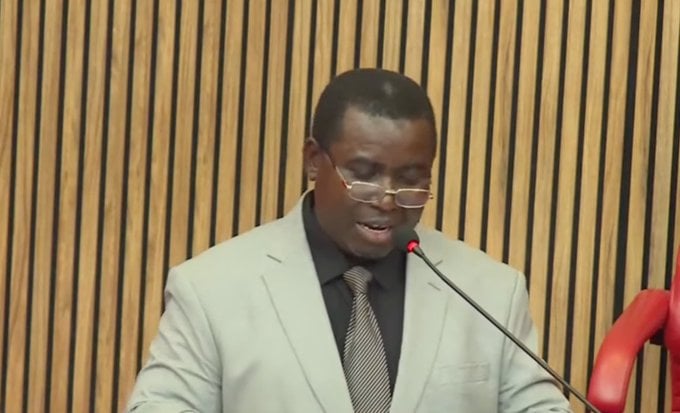

Nigeria’s electoral commission has issued a fierce denial following reports that its chairman endorsed a partisan post on social media, describing the claims as a “coordinated campaign of calumny.”
The Independent National Electoral Commission (INEC) stated on Friday that its chairman, Professor Joash Amupitan, SAN, does not own or operate a personal account on X (formerly Twitter). The commission dismissed a circulating screenshot of a purported post as a “deepfake” and a “figment of the imagination” of political opponents.
The controversy comes at a delicate moment for Professor Amupitan, who is facing intensifying pressure from opposition figures and civil society groups to resign over his handling of recent internal party disputes.
The ‘Digital Assassination’ Attempt
In a statement signed by his media adviser, Adedayo Oketola, the chairman’s office argued that the forged post was a “desperate attempt to impugn his neutrality.” The commission further revealed that it is working with cyber-intelligence units to track the “digital imposters” behind what it termed identity theft.
“The Commission will not fold its arms while the character of its leadership is being assassinated by digital imposters,” the statement read. It warned that those responsible would face prosecution under the Cybercrimes Act.
Background: A Chairmanship Under Fire
The digital row is set against a backdrop of significant political turbulence. Over the last week, prominent leaders within the African Democratic Congress (ADC), including former Senate President David Mark and high-profile opposition figures, have formally demanded Professor Amupitan’s removal.
The calls for his resignation were triggered by INEC’s decision to “de-recognise” certain party executives following a complex leadership tussle. Critics have accused the chairman of “regulatory overreach” and “partisan interference,” with some analysts suggesting the commission is becoming a “battleground” for the 2027 general elections.
Analysis: The Battle for Credibility
For Professor Amupitan, the stakes are remarkably high. As a Senior Advocate of Nigeria (SAN), his reputation is built on legal precision. By portraying him as a “partisan tweeter,” his critics are attempting to erode the one thing an electoral chief cannot survive without: the appearance of absolute neutrality.
The use of “deepfake” interactions is a growing concern in Nigerian politics. It suggests that the 2027 cycle will be fought as much in the digital trenches as at the polling booths. However, for the opposition, the “X-post” is merely a symptom of a larger grievance—they argue that under Amupitan’s watch, INEC has become too quick to intervene in the internal mechanics of political parties, effectively “picking winners and losers” before a single vote is cast.
A Warning to the Public
Beyond the political fallout, INEC warned that cybercriminals are also using fake accounts in the Chairman’s name to defraud citizens. The commission urged Nigerians to rely only on “verified institutional channels” for official information.
Despite the “needless distractions,” the electoral body maintains it remains “undeterred” in its mission to deliver credible polls. However, with the ADC leadership crisis still pending in the High Court and public distrust simmering, the “calm” the commission seeks remains elusive.




Add Comment