

By Segun Ojumu
A high-stakes row has broken out between Nigeria’s national grid operator and one of its largest regional suppliers, exposing deep divisions over the true capacity of the country’s embattled power sector.
The Transmission Company of Nigeria (TCN) issued a stinging public rebuke on Friday to the Port Harcourt Electricity Distribution Company (PHEDC), accusing the firm of spreading “outdated and inaccurate” data that undermines public trust in the nation’s energy reforms.
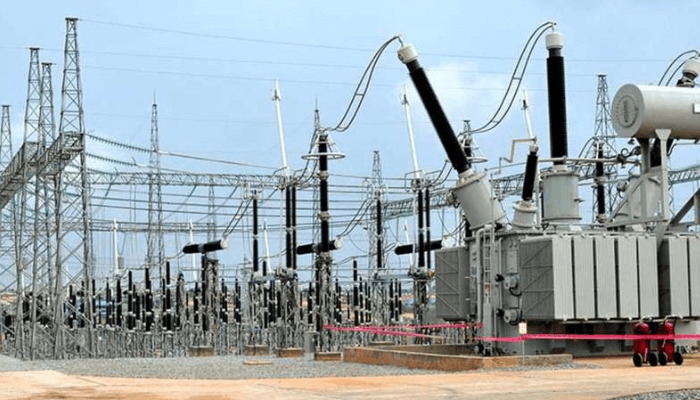
The dispute centres on exactly how much electricity Nigeria’s infrastructure can actually carry. While the Port Harcourt firm claimed the system is capped at 7,300MW, the TCN insists that recent “capital-intensive investments” have pushed that limit to a verified 8,700MW.
The ‘Blame Game’
In a “fact file” shared with customers, PHEDC attributed the country’s frequent blackouts to a combination of gas shortages at thermal plants and low water levels at hydro stations like Kainji and Shiroro. They argued the operational capacity of the entire grid rarely exceeds 5,000MW.
However, the TCN’s spokesperson, Ndidi Mbah, hit back, suggesting the bottleneck lies not with the cables, but with the distribution companies (DisCos) themselves. “The question is: do the DisCos nominate beyond 4,000MW to 5,000MW?” the TCN asked, implying that the suppliers are not requesting enough power to meet the grid’s true potential.
A ‘Record-Breaking’ Quarter?
To bolster its case, the TCN released previously internal figures from the first quarter of 2025 to prove the grid’s resilience:
- March 4, 2025: The grid hit a peak of 5,801MW—a milestone the TCN says proves the 5,000MW “ceiling” cited by critics is a myth.
- Infrastructure Surge: The company pointed to a wave of new transformer installations and “reconductoring” projects that have modernized the colonial-era backbone of the network.
Analysis: The Transparency Trap
For the average Nigerian business owner in Port Harcourt or Aba, these technical arguments provide little comfort. Whether the capacity is 7,000MW or 8,000MW, the reality on the ground remains one of “operational instability.”
The “war of numbers” highlights a classic systemic flaw in Nigeria’s power value chain: the penalty paradox. Under current rules, if a generation company (GenCo) declares capacity it cannot meet or if a DisCo fails to take the power it promised to distribute, financial penalties apply.
By publicizing “outdated” lower figures, the TCN suggests that DisCos like PHEDC may be trying to lower expectations—and their potential liability—for failing to deliver power to the “last mile.”
The Investor Factor
The TCN warned that such misinformation “misrepresents sector progress” and could scare off the very foreign investors Nigeria needs to reach its ultimate goal of 13,000MW installed capacity.
As the government of President Bola Tinubu continues to push for a “cost-reflective tariff” system, the pressure on these agencies to provide accurate, real-time data is no longer just a matter of pride—it is a requirement for the survival of the industry.



Add Comment