
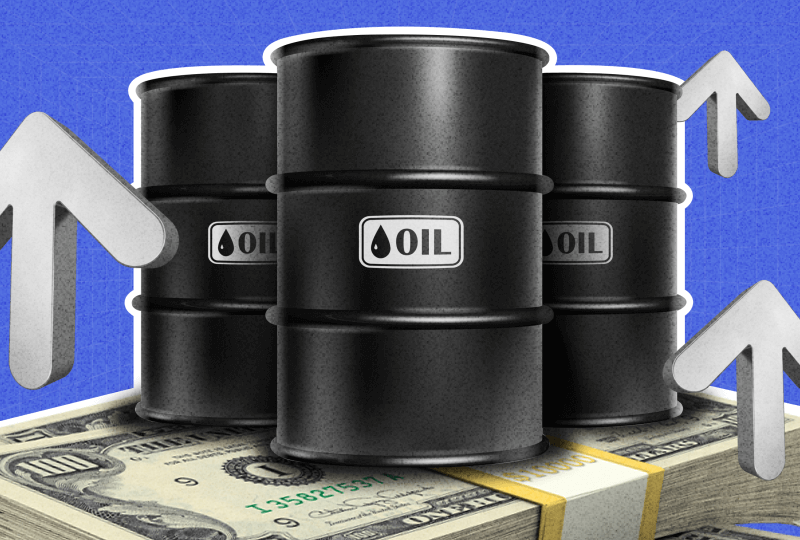

World stock markets have tumbled, and oil prices have surged after US President Donald Trump used his first prime-time address on the war to warn of continued military strikes, offering no immediate end to the energy crisis.
In a speech that dented hopes for a swift resolution to the conflict, Mr. Trump told the American people that US forces would bring Iran “back to the Stone Ages” over the next two to three weeks.
While the president insisted that battlefield goals would be met “very, very shortly,” investors were left rattled by the lack of a clear plan to reopen the Strait of Hormuz, the world’s most vital oil artery, which remains crippled by the hostilities.
Oil prices ‘surge’ again
The reaction in the energy markets was immediate. Brent crude, which had briefly dipped below $100 on Wednesday following optimistic rumours of peace talks, jumped nearly seven per cent to hit $108.15 a barrel.
Market analysts say the “illusion” of an early ceasefire has been shattered. “The message was not one of panic, but it was unmistakably one of unfinished business,” said Stephen Innes of SPI Asset Management. “And in markets, unfinished business is oxygen for volatility.”
The fallout across global stock exchanges was equally severe:
- Asia: Seoul’s Kospi index plunged more than four per cent, while Tokyo, Hong Kong, and Shanghai all closed significantly lower.
- Europe: London’s FTSE 100 and markets in Paris and Frankfurt were all trading in the red on Thursday morning.
- Currencies: Both the Euro and the British Pound fell against a strengthening US Dollar as traders sought “safe-haven” assets.
The ‘Hormuz’ deadlock
A central sticking point remains the Strait of Hormuz. Despite Mr Trump’s demand that energy-dependent nations “get your own oil” and reopen the waterway themselves, the Islamic Republic maintains that the strait will remain closed to its “enemies.”
In London, British Prime Minister Keir Starmer is preparing to host an emergency meeting of 35 nations on Thursday. The summit aims to coordinate a diplomatic response to restore “freedom of navigation” and secure the release of trapped ships and seafarers.
Analysis: A ‘wartime footing’ for the global economy
The economic alarm bells are now ringing louder at the highest levels. The World Bank and the IMF have announced a new partnership to coordinate aid, citing extreme concerns over global inflation, job security, and food supplies.
In South Korea, President Lee Jae Myung has already placed his government on a “wartime footing,” proposing a $17.2 billion emergency budget to cushion the blow.
The volatility of the past few weeks highlights a “coiled spring” market—ready to jump on any hint of good news, but equally prone to deep sell-offs when the reality of a prolonged, destructive conflict sets in. As one analyst put it, the full macroeconomic implications of this war will only become clear “in the fullness of time.”


Add Comment