
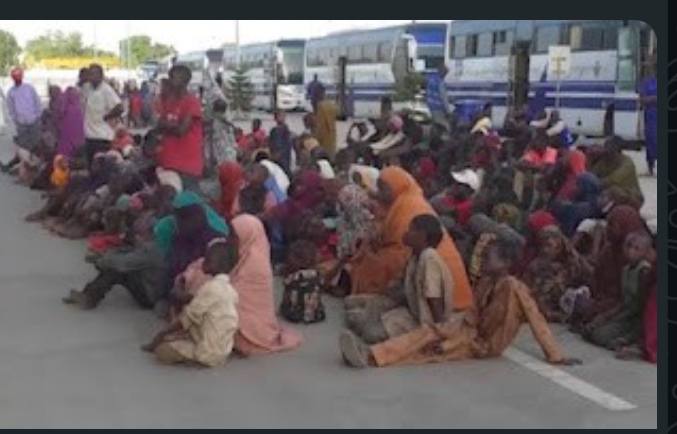

The Nigerian government has completed a large-scale humanitarian evacuation of more than 1,200 of its nationals who were left stranded in the neighbouring Republic of Niger.
In a coordinated operation alongside the International Organization for Migration (IOM), a total of 1,230 Nigerians were returned home in two separate batches over the final week of March. The Ministry of Foreign Affairs confirmed on Wednesday that the returnees have now been processed and reunited with their families.
The evacuation is the latest sign of the growing pressure on migration routes in the Sahel, a region currently grappling with political instability and a tightening of border controls following recent military coups.
The ‘Kano’ Reception
The returnees—comprising 708 individuals in the first group and 522 in the second—arrived in the northern city of Kano, where a massive multi-agency task force met them.
According to the Ministry’s spokesperson, Kimiebi Ebienfa, the operation involved:
- Profiling and Documentation: Led by the Nigeria Immigration Service to ensure all returnees were accounted for.
- Emergency Care: Temporary housing at the Immigration Training School in Kano, where the Red Cross provided medical attention and essential supplies.
- Reintegration: Efforts by the National Commission for Refugees to help the evacuees transition back into their home communities.
Analysis: Diplomacy in a volatile region
The success of this evacuation is a rare piece of diplomatic cooperation between Abuja and Niamey. Relations between Nigeria and the Nigerien military junta have been strained since the 2023 coup, which led to the closure of borders and the suspension of several regional security pacts.
By publicly thanking the Republic of Niger for its cooperation, Nigeria is attempting to maintain a “humanitarian bridge” despite the broader political friction within the ECOWAS bloc.
However, the sheer number of “stranded” Nigerians—many of whom are believed to have been attempting the perilous journey across the Sahara toward Europe—highlights the ongoing desperation driving irregular migration. For the Nigerian government, the challenge now moves from evacuation to prevention, as it seeks to discourage its citizens from embarking on high-risk journeys through a region increasingly defined by conflict.




Add Comment