
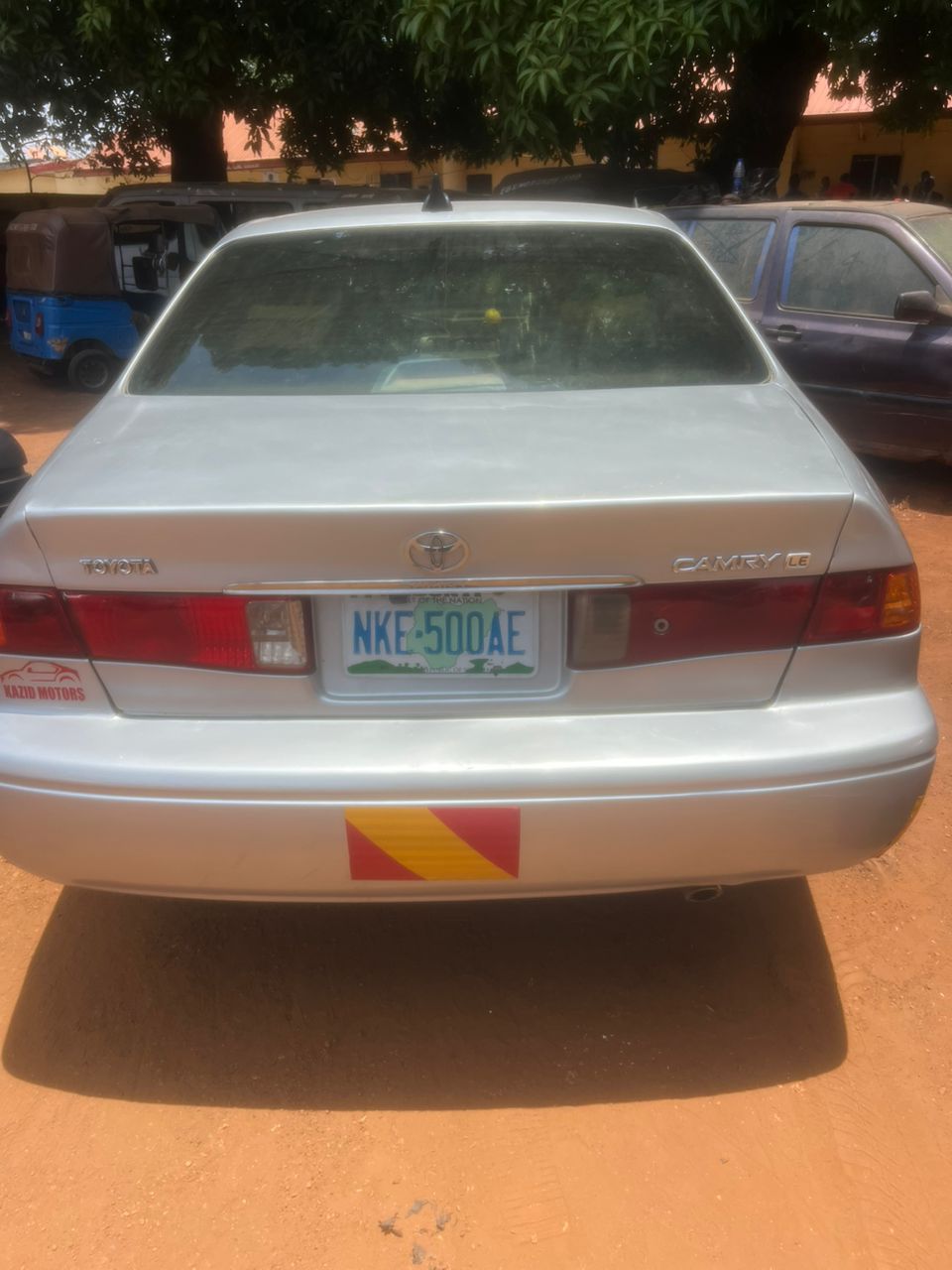

Police in south-eastern Nigeria have recovered a stolen car more than a decade after it was snatched from its owner, thanks to a high-tech national tracking database.
The Toyota Camry was flagged by officials in Ebonyi State on Tuesday during what appeared to be a routine registration attempt. However, when a Motor Licensing officer entered the vehicle’s details into the National Vehicle Identification Scheme (NVIS), the system immediately raised a red flag.
Investigations revealed the car had been stolen nearly 300 miles away in Benue State on 13 August 2015—eleven years ago.
A digital trap
The vehicle’s original owner, Adeka Emmanuel Akoji, was contacted by the Federal Road Safety Corps (FRSC) and confirmed he had lost the car over a decade ago.
Despite attempts to conceal the car’s identity with new license plates—changing it from its original ‘MKD’ registration to a local ‘NKE’ number—the digital history of the chassis remained linked to the original theft report.
Following the alert, the FRSC coordinated with a specialist anti-kidnapping squad in the city of Abakaliki. In a swift operation on Friday afternoon, security forces moved in to seize the vehicle.
‘Seamless cooperation’
The head of the FRSC, Corps Marshal Shehu Mohammed, praised the “professionalism and diligence” of the officers involved. He described the recovery as a “decisive breakthrough” in inter-agency collaboration between road safety officials and the national police.
“The NVIS platform remains a critical tool in tracking and recovering stolen vehicles,” a spokesperson for the Corps said, adding that technology is increasingly making it difficult for criminal networks to “launder” stolen cars back into the legal market.
Analysis: Closing the loophole
Vehicle theft has long been a persistent issue across Nigeria, with stolen cars often moved across state lines and re-registered with forged documents. For years, a lack of communication between different state licensing offices allowed these “ghost vehicles” to circulate undetected.
However, the expansion of the national digital database is beginning to close those loopholes. This case—recovering a car after more than a decade—serves as a warning to those buying used vehicles. Authorities have urged the public to use the national verification platform before any purchase to ensure they aren’t inadvertently buying a piece of criminal history.




Add Comment