
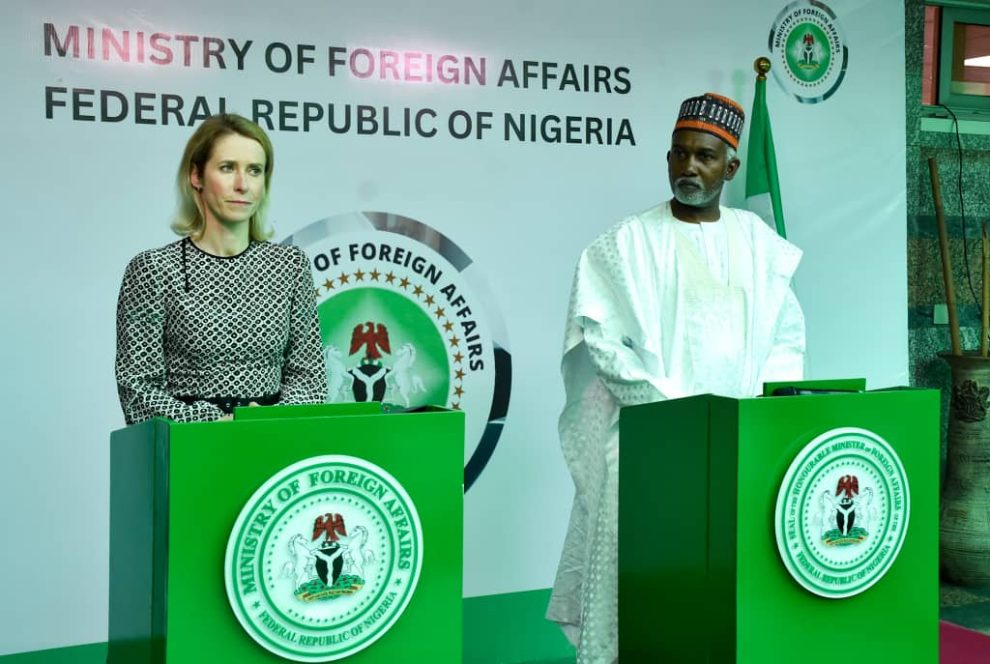

The European Union has unveiled a massive new investment package for Nigeria, signaling a major upgrade in diplomatic and economic ties between Brussels and Abuja.
Following a high-level ministerial dialogue in the Nigerian capital on Monday, EU officials announced that €290 million ($315 million) would be immediately mobilized for projects spanning high-speed internet, local vaccine production, and sustainable agriculture.
The move is part of the EU’s “Global Gateway” strategy—a multi-billion euro plan designed to counter global rivals by offering sustainable infrastructure investments to developing nations.
The ‘Digital Backbone’
The largest share of the new funding—€131 million—is earmarked for a radical overhaul of Nigeria’s digital infrastructure. In partnership with the European Bank for Reconstruction and Development, the EU aims to:
- Lay 90,000 km of fiber optic cable across the country.
- Connect 33 million underserved Nigerians to secure, affordable internet.
- Support the ‘3 Million Technical Talent’ programme, an ambitious federal initiative to turn Nigeria into a global outsourcing hub for tech skills.
“Bringing more EU investment to Nigeria… is a key priority for both sides,” said Kaja Kallas, the EU’s High Representative for Foreign Affairs, following talks with Nigeria’s Foreign Minister, Yusuf Maitama Tuggar.
Local medicines and ‘Climate-Smart’ cocoa
The package also targets two of Nigeria’s most critical vulnerabilities: healthcare and food security.
With €55 million dedicated to health, the EU is providing credit lines through the Bank of Industry to support the local manufacturing of medicines and vaccines. Officials say the goal is to reduce Nigeria’s heavy reliance on imported pharmaceutical products.
In agriculture, €86 million will be used to modernize the cocoa and dairy sectors. The funding aims to help Nigerian farmers meet strict EU environmental standards, potentially doubling milk production and securing long-term export routes for Nigerian cocoa to European markets.
Managing the migration challenge
A further €16 million has been allocated to migration management. Unlike previous security-heavy approaches, this funding focuses on the “reintegration” of returning migrants and providing them with social and economic support at home.
However, the EU remains firm on border security, stating that a significant portion of the money will also be used to help Nigerian security services “dismantle the criminal networks” responsible for human trafficking.
Analysis: A billion-euro partnership
With this latest announcement, total EU support for Nigeria signed since 2025 now stands at €962.5 million.
For the Nigerian government, the influx of capital aligns with President Bola Tinubu’s “Renewed Hope” agenda, which relies heavily on attracting foreign direct investment to stabilize a struggling currency. For the EU, the deal secures its position as Nigeria’s most significant development partner at a time when competition for influence in Africa is at an all-time high



Add Comment