
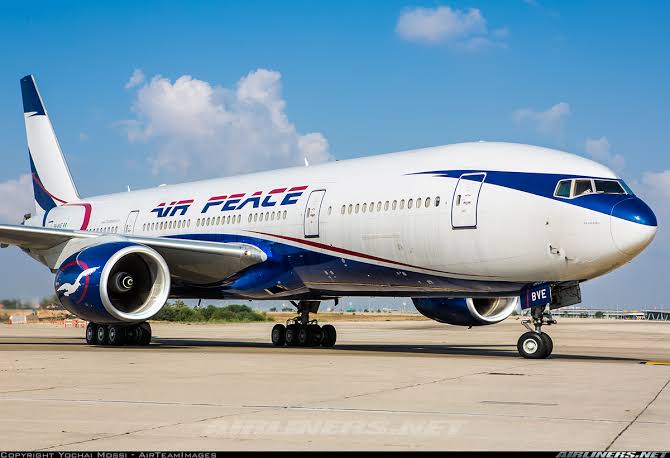

Nigeria’s consumer protection agency has summoned two major domestic carriers—Air Peace and United Nigeria Airlines—over complaints of steep increases in ticket prices ahead of the Christmas and New Year travel rush.
In a statement issued on Sunday, the Federal Competition and Consumer Protection Commission (FCCPC) said both airlines were ordered to appear before it on Thursday, 3 December, to explain the factors behind their pricing decisions.
Corporate affairs director Ondaje Ijagwu said the summonses, issued on 25 November, followed numerous passenger complaints over what they described as arbitrary price surges on popular domestic routes—particularly to the south-east and south-south.
Sharp December price jumps cited
Among the fare increases highlighted by the commission:
- Lagos–Asaba (Air Peace): Rose from ₦118,400 on 9 November to ₦337,500 for travel on 21 December.
- Abuja–Enugu (Air Peace): Jumped from ₦116,400 on 9 November to ₦335,500 for 21 December.
- Lagos–Benin (United Nigeria Airlines): Increased from ₦210,000 on 9 November to ₦310,500 for 21 December.
‘Fact-finding, not price control’
The FCCPC stressed that it had not yet reached any conclusion on whether competition or consumer laws had been breached, adding that any next steps would be guided by evidence under the 2018 FCCPA Act.
Surveillance and investigations director Bola Adeyinka said the inquiry was not aimed at regulating or fixing ticket prices.
“The commission recognizes that businesses must take legitimate commercial considerations into account when determining prices,” she said. “This inquiry is a fact-finding exercise, not an attempt to set or control airfares.”
The agency urged passengers with relevant booking and payment records to submit complaints through its official channels.
Recurring holiday dispute
Domestic airfares in Nigeria frequently surge during the December peak travel period. Last year, one-way tickets on several routes climbed by around 150%, crossing ₦300,000.
An interim FCCPC review published in February 2026 linked those December spikes to airline yield management and capacity allocation alongside seasonal demand and fleet constraints—findings the Airline Operators of Nigeria rejected, arguing that fares are driven by high operating costs, aircraft availability and supply and demand.


Add Comment