

By Segun Ojumu
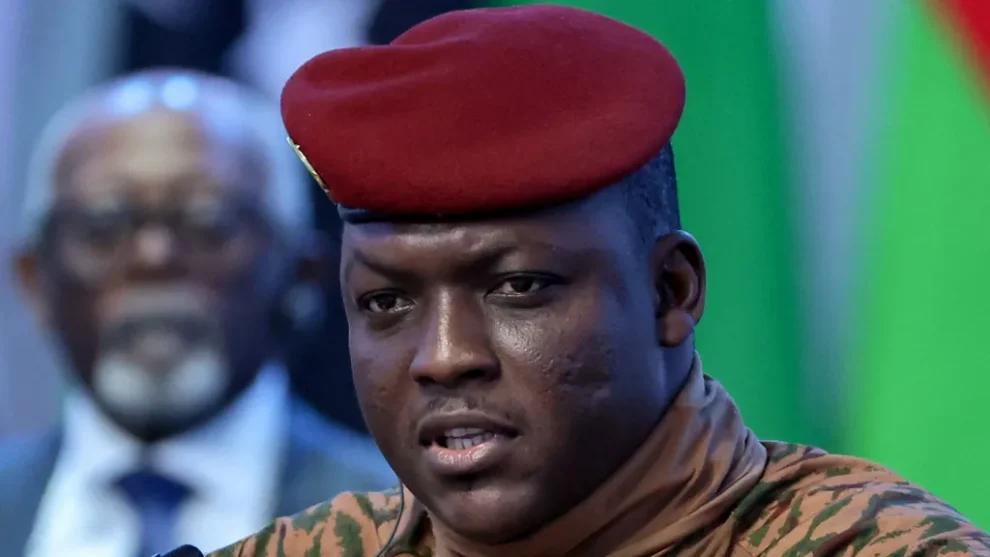
The military ruler of Burkina Faso, Captain Ibrahim Traoré, has launched a blistering attack on democratic governance, claiming the system “kills” and is entirely unsuited to the African continent.
In a wide-ranging interview on state television, the 38-year-old leader—who seized power in a coup three years ago—called on his citizens to “forget” the issue of democracy. He argued that Western-led political systems have brought nothing but “bloodshed” to the region, citing the post-Gaddafi instability in Libya as a cautionary tale for the Sahel.
Capt Traoré had originally pledged to return the country to civilian rule by July 2024, but his junta recently extended its hold on power for a further five years, effectively banning all political parties in the process.
‘Our Own Approach’
While the junta leader did not provide a specific blueprint for a new government, he insisted that Burkina Faso would “change the way things are done” by moving toward a system rooted in “revolutionary mobilisation” and traditional leadership.
“A real politician [in Africa] is someone who embodies every vice: a liar, a sycophant, a smooth-talker,” Traoré said, justifying the dissolution of the country’s political class. He emphasised that the nation must instead focus on “military self-reliance” and intense hard work to catch up with wealthier global powers.
Analysis: The Pivot to Moscow
Capt Traoré’s rhetoric mirrors a broader trend across the “Coups Belt” of West Africa. Like his neighbours in Mali and Niger, Traoré has:
- Expelled Western Influence: Severed long-standing military ties with France and other European allies.
- Embraced Russia: Turned to Moscow for military hardware and personnel to combat a decade-long Islamist insurgency.
- Suppressed Dissent: Cracked down on independent media and civil society, with reports suggesting critics are being forcibly conscripted to the front lines of the war.
A ‘Grim’ Security Reality
Despite Traoré’s popular pan-Africanist message, the security situation on the ground remains dire. A report released on Thursday by Human Rights Watch (HRW) claims that more than 1,800 civilians have been killed since the Captain took power in 2023.
Crucially, the report attributes two-thirds of those deaths to the Burkinabè military and its allied militias, with the remainder blamed on the very Islamist militants the junta promised to defeat.
For many across the continent, Traoré remains a symbol of defiance against “Western imperialism.” However, for those living in the crossfire of the Sahel’s insurgency, the “revolutionary” alternative to democracy is being increasingly defined by a high human cost and a lack of clear constitutional direction.



Add Comment