

KAMPALA, Uganda—Uganda has announced a significant shift in its immigration policy, granting visa-free entry to nationals from 40 countries while pointedly excluding the United States, United Kingdom, and the European Union.
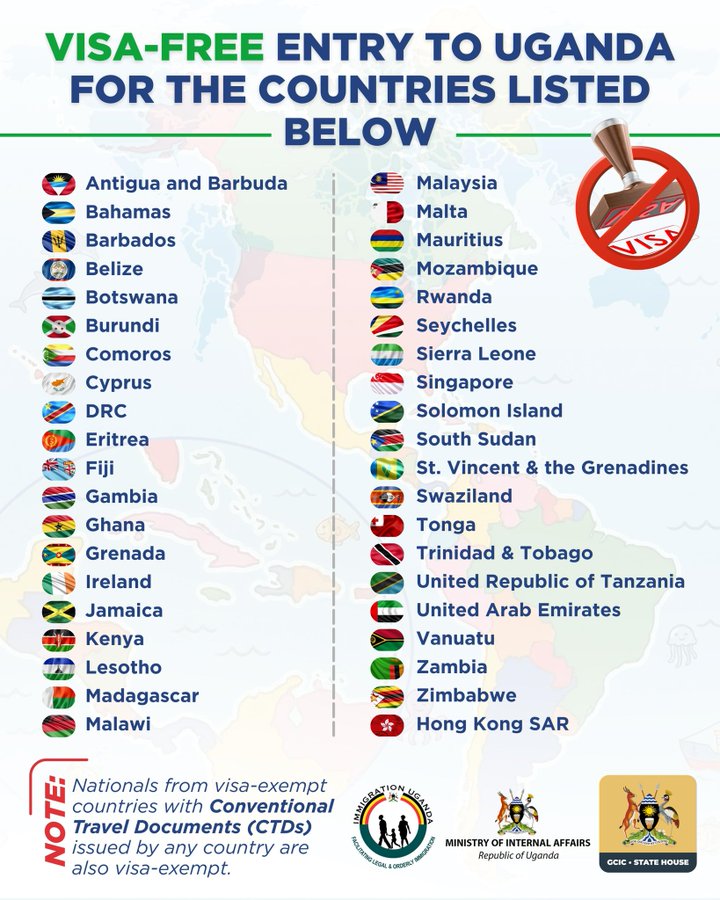
Under the new measures, travellers from the approved list—which includes over 20 African nations and several Caribbean and Asian territories—can stay in the East African country for up to three months for tourism or business without a prior visa.
The Ugandan government described the move as a commitment to “promoting regional cooperation, tourism, trade, and people-to-people ties.”
The Western Exclusion
The policy change follows a diplomatic rift with Washington. In January 2026, the United States imposed strict new visa rules on Ugandans, including a requirement for a refundable $15,000 bond for certain visitor visas and a reduction in visa validity to just three months.
While Commonwealth nations such as Jamaica, Malaysia, and Singapore are included in the new visa-free regime, Western powers remain notably absent. Analysts suggest the move is a reciprocal response to the tightening of travel restrictions by Western governments over the past year.
A Pivot in Diplomacy
Among the African countries now granted visa-free access are regional neighbours Kenya, Rwanda, and Tanzania, alongside nations further afield like Ghana, Sierra Leone, and Mauritius.
Uganda has also refined its list of countries eligible for diplomatic travel documents, focusing on what it calls “high-level cooperation.” This shortened list includes Russia, Iran, Turkey, and India, signalling a strategic shift in Kampala’s international alliances.
“This policy supports official visits and close collaboration between these countries,” the government stated on its official social media channels.
The changes come at a time when several African nations are re-evaluating their visa regimes to boost intra-continental trade and tourism, though the exclusion of major Western economies highlights the increasingly complex nature of Uganda’s foreign relations.

Add Comment