
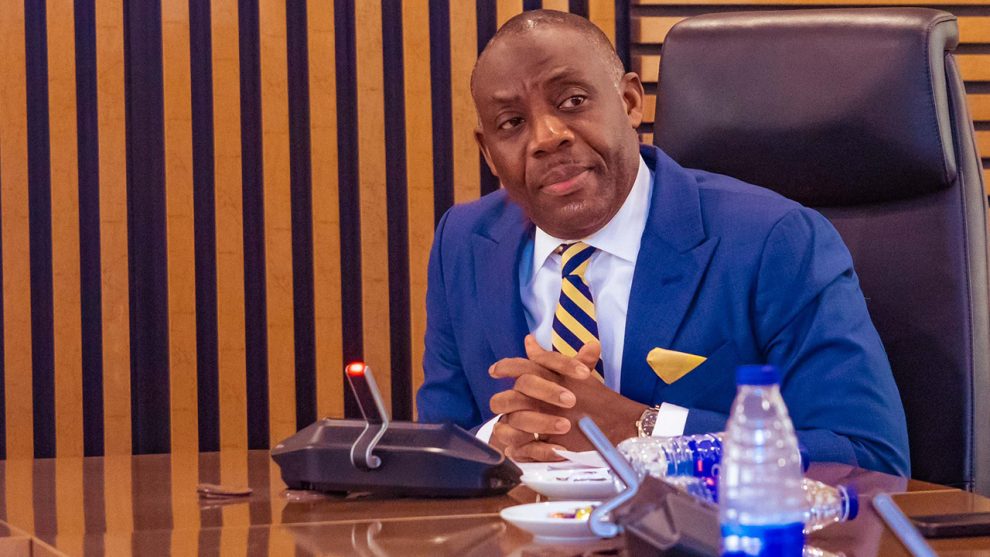

Nigeria is to phase out a policy that forces junior and senior secondary schools to operate independently, following revelations that more than 20 million children have dropped out of education before reaching the senior level.
The country’s Education Minister, Tunji Alausa, announced the decision in the capital, Abuja, declaring that the current system had failed.
Under the “disarticulation policy,” junior and senior secondary schools were required to have separate facilities and headteachers. However, Mr. Alausa said this had created a severe bottleneck in the country’s education system.
“We have 20 million dropouts from primary school to JSS [Junior Secondary School],” the minister said. “Where are those students?”
He pointed to a stark imbalance in infrastructure, revealing that Nigeria has 80,000 public primary schools but only 15,000 junior secondary schools—a ratio of roughly eight to one.
‘System harmed’
According to the minister, this structural deficit has led to severe overcrowding in junior schools while senior secondary classrooms sit underutilised. He cited the northern state of Kaduna as a key example of where the policy had faltered.
“This disarticulation policy has failed. We will phase it out,” Dr Alausa said, suggesting the system had been used to create administrative roles at the expense of students.
“We can’t be creating positions because we want to create a director level for people while we harm our education system. It’s about doing what is best for every Nigerian child.”
The proposal to formally abolish the policy will be presented at the next meeting of the National Council on Education.
A worsening crisis
Nigeria currently grapples with one of the world’s largest populations of out-of-school children. The crisis is particularly acute in rural areas and regions affected by conflict, where access to formal education remains dangerously limited.
Government data paints a bleak picture of the country’s educational standards, with recent figures showing that three in four Nigerian children cannot read by the age of 10.
While the government has previously faced criticism for failing to improve school transition rates, Dr Alausa insisted the current administration would deliver results. “This government will not fail. We are fixing it,” he said.
Unfinished projects
In a bid to tackle the broader crisis, the minister also inaugurated a new monitoring committee to oversee state-funded “Smart Schools”, bilingual schools, and alternative learning centres.
The Universal Basic Education Commission (UBEC) has invested heavily in hundreds of these specialised schools across Nigeria. However, many remain uncompleted or empty.
Dr Alausa described the stagnant projects as a waste of public resources and tasked the new committee, chaired by Professor Rashid Aderinoye, with ensuring the facilities are urgently completed and handed over to state governments.
Education experts have long argued that building new infrastructure is only half the battle; the real challenge for Nigeria lies in making sure completed schools are fully operational, properly staffed, and safe for pupils to attend.




Add Comment