
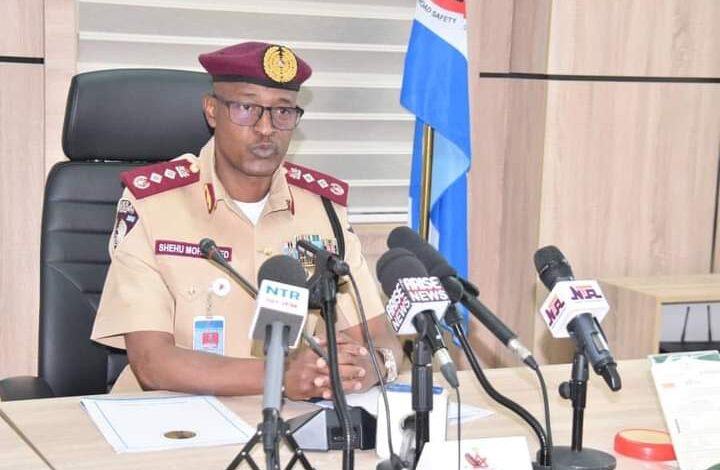

ABUJA, Nigeria — The head of Nigeria’s highway regulatory body took the unusual step of personally directing a multi-agency emergency operation on Wednesday to clear a kilometres-long gridlock on one of the country’s most vital transport veins.
The Corps Marshal of the Federal Road Safety Corps (FRSC), Shehu Mohammed, traveled to the scene of the bottleneck at the Azara Bridge along the Jere axis of the Abuja–Kaduna Expressway to assume direct operational command.
The severe traffic paralysis had left hundreds of commuters stranded on the strategic northern corridor, raising immediate economic and security concerns before the intervention successfully restored the flow of vehicles.
Construction Bottleneck Sparks Chaos
According to an official statement released on 27 May 2026 by the FRSC’s Chief Public Education Officer, Deputy Corps Commander Osondu Ohaeri, the crisis was triggered by a combination of infrastructural upgrades and a mechanical failure.
The gridlock rapidly escalated due to:
- The Location: A narrow diversion point designed to channel traffic around ongoing road construction activities.
- The Trigger: The sudden breakdown of an articulated heavy-duty vehicle that was conveying a large crane.
- The Escalation: The disabled vehicle completely blocked the bypass, causing stationary traffic to back up for several kilometres within a short period.
A Coordinated Field Evacuation
Recognising the potential for a prolonged paralysis on the high-volume motorway, Mr Mohammed arrived at the blockage to coordinate a joint-agency response.
Under the Corps Marshal’s direct field supervision, emergency personnel from both the Kaduna and Federal Capital Territory (FCT) Sector Commands of the FRSC were deployed to work alongside units of the Nigerian Army and local construction engineers.
The joint team executed a strategic evacuation of the disabled crane-bearing vehicle, managing to clear the obstruction and reopen the highway. Eyewitnesses at the scene praised the rapid and unusual physical deployment of the agency’s top commander, noting that his direct management accelerated the clearing process and prevented potential secondary accidents often associated with sudden highway obstructions.
Sustaining Highway Oversight
The Abuja–Kaduna Expressway is a critical economic artery linking Nigeria’s capital to the north, but it has historically faced challenges ranging from traffic accidents to broader security vulnerabilities when commuters are left stationary for extended periods.
Following the successful clearance of the Azara Bridge axis, the FRSC issued a statement reassuring the motoring public of its continued commitment to prompt field interventions. The agency emphasized that it will continue to refine its collaborative emergency response mechanisms with the military and construction firms to guarantee safer, more efficient transit across the federation’s highway network.


Add Comment