

ABUJA, Nigeria — The ECOWAS Parliament has issued a formal resolution strongly condemning the wave of coordinated insurgent attacks in Mali that killed the country’s defence minister, his family, and scores of soldiers and civilians.
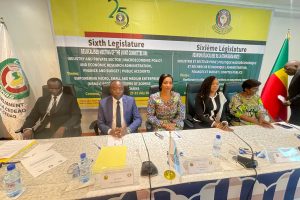
Meeting during its ordinary session in Abuja, the regional legislature described the 25 April assaults as “heinous and barbaric”. In a draft resolution finalised at its 15 May sitting, the parliamentary plenary pushed for immediate, binding security ties between coastal West African nations and the military-led Sahel states to counter the expanding jihadist threat.
The text of the resolution has been forwarded to the President of the ECOWAS Commission to urge national governments to turn the statement into direct military action.
A Devastating Blow to Mali’s Junta
The resolution follows one of the most sophisticated and daring offensives mounted by militants in Mali in recent years. On 25 April, simultaneous strikes by a coalition of Tuareg rebels and Al-Qaeda-linked fighters hit strategic locations across the country, including Bamako, Kati, Gao, Kidal, Mopti, and Sévaré.
The most high-profile casualty of the raid was Mali’s Defence Minister, General Sadio Camara. Insurgents drove a vehicle laden with explosives directly into his compound at the Kati military base outside the capital, triggering a fierce gun battle that claimed his life, alongside his wife and grandchildren.
ECOWAS lawmakers expressed their “sincere condolences and sympathy” to the people of Mali, acknowledging that the attack has seriously destabilised the political and security architecture of the entire Sahel region.
Bridging the Political Rift
The parliamentary push comes at a highly delicate diplomatic moment. Mali, alongside its neighbours Burkina Faso and Niger, formally severed ties with ECOWAS earlier this year to form their own breakaway alliance.
However, the resolution makes it clear that the regional bloc believes it cannot afford to cut security ties with the junta-led states, given the fluid nature of the insurgency.
The parliament has called on all member states to dramatically scale up cross-border cooperation with Mali, focusing on three key areas:
- Intelligence Sharing: Setting up rapid, real-time channels to track militant movements across porous borders.
- Border Security: Deploying coordinated patrols to prevent insurgent groups from using neighbouring territories as safe havens.
- Joint Military Operations: Restoring tactical coordination between regional forces and the Malian army to dismantle extremist enclaves.
A Unified Regional Defense
The ECOWAS lawmakers warned that the ongoing fragmentation of West Africa’s political landscape is actively benefiting terrorist networks, which are preying on the breakdown of regional trust to expand their influence.
By passing the resolution, the parliament sought to signal that despite the intense political disagreements regarding Mali’s transition to democratic rule, the collective threat of violent extremism requires a unified response. The bloc maintained that the eradication of terrorism remains the most critical hurdle to preserving the economic integration and stability of West Africa.


Add Comment