
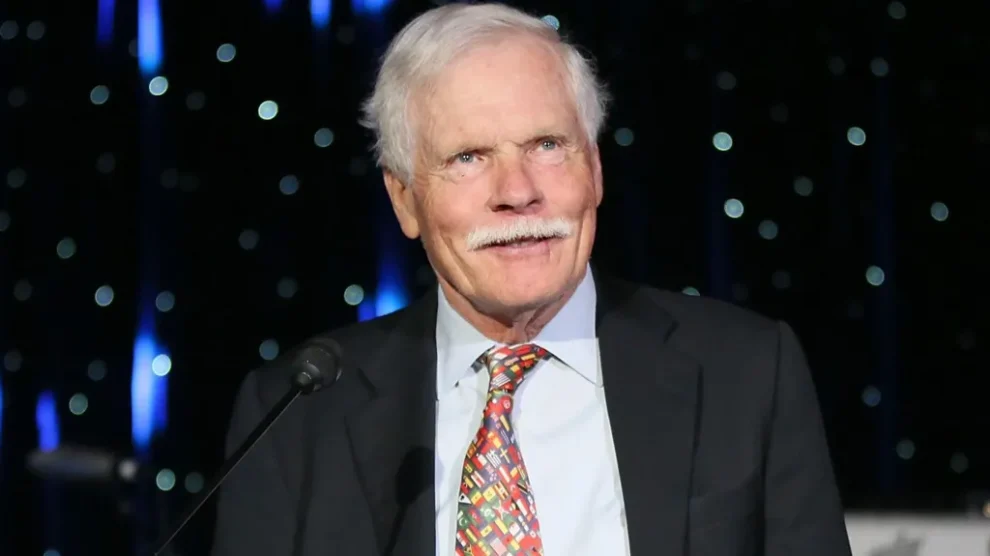

ATLANTA, USA — Ted Turner, the visionary media mogul who transformed global journalism by launching CNN, the world’s first 24-hour news channel, has died at the age of 87.
The network announced his passing on Tuesday, marking the end of an era for a man whose “intrepid and fearless” leadership redefined how the world consumes information. Known as “the Mouth of the South,” Mr Turner’s gamble on rolling news changed the media landscape forever.
A Revolutionary Vision
When Mr. Turner launched the Cable News Network in 1980, critics were dismissive, mocking it as the “Chicken Noodle Network.” At the time, the idea of a dedicated 24-hour news cycle was considered financially and journalistically impossible.
However, the network proved its critics wrong through its exhaustive coverage of era-defining events:
- 1981: The assassination attempt on President Ronald Reagan.
- 1986: The Challenger space shuttle disaster.
- 1991: Live, unprecedented coverage of the Gulf War, which made CNN a household name globally.
Former US President George H.W. Bush once famously remarked that he learned more from watching CNN than he did from the CIA.
Tributes to a ‘Giant’
Mark Thompson, the current CEO of CNN, described Mr. Turner as “the giant on whose shoulders we stand,” adding that he would always be the “presiding spirit” of the organisation.
In an unexpected tribute, US President Donald Trump—frequently a fierce critic of the modern network—called Mr. Turner “one of the greats of broadcast history.” In a social media post, Mr. Trump described him as a friend who was “always willing to fight for a good cause.”
Beyond the Newsroom
Mr. Turner’s empire began with his father’s billboard company in Atlanta, which he expanded into the Turner Broadcasting System (TBS). His success paved the way for competitors like Rupert Murdoch’s Fox News, though Mr. Turner remained a singular figure in the industry.
Beyond broadcasting, he was a noted philanthropist and sportsman, winning the America’s Cup in 1977. Despite his “Captain Outrageous” persona, his colleagues remember him as a leader who was always willing to “back a hunch” and trust his own judgment to change the world.




Add Comment