
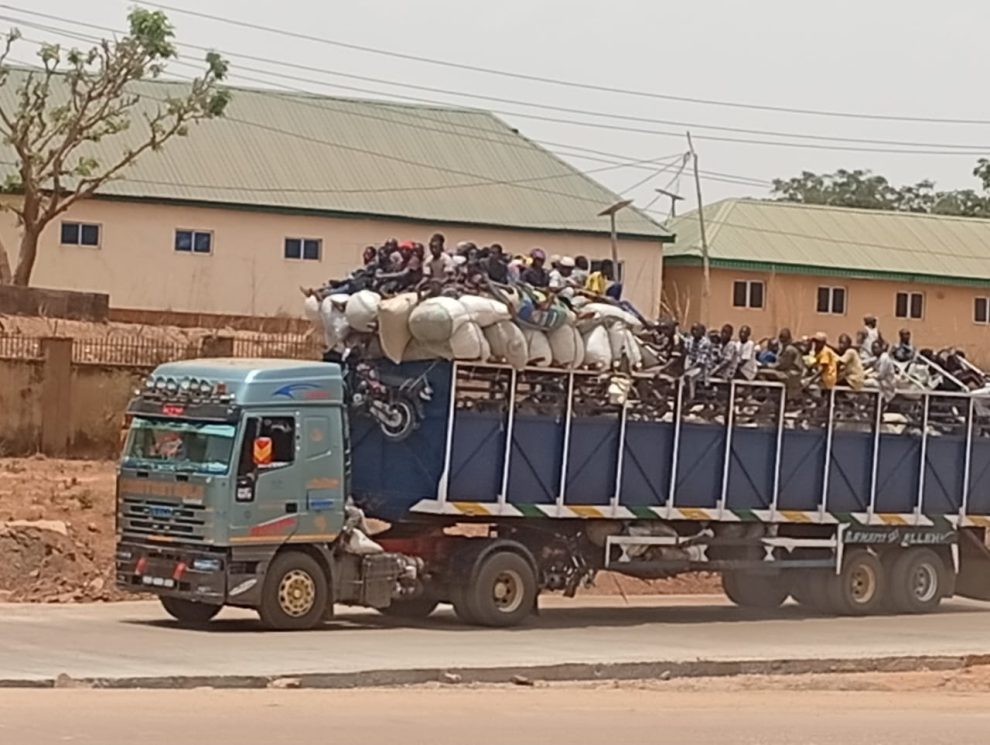

Authorities in northern Nigeria have intercepted a series of articulated vehicles carrying a “hazardous” mix of over 100 passengers, livestock, and heavy goods, as part of a nationwide crackdown on a practice known as “mixed loading.”
The Federal Road Safety Corps (FRSC) confirmed on Monday that the vehicles were stopped along critical corridors in Kaduna State during an intensive Easter patrol. The practice—where human beings are packed into the trailers of heavy goods vehicles alongside animals and cargo—has been blamed for a surge in high-fatality accidents across the country.
The Corps Marshal, Shehu Mohammed, described these vehicles as “rolling death traps,” warning that the combination of unstable loads and living cargo creates a “ticking time bomb” on the nation’s highways.
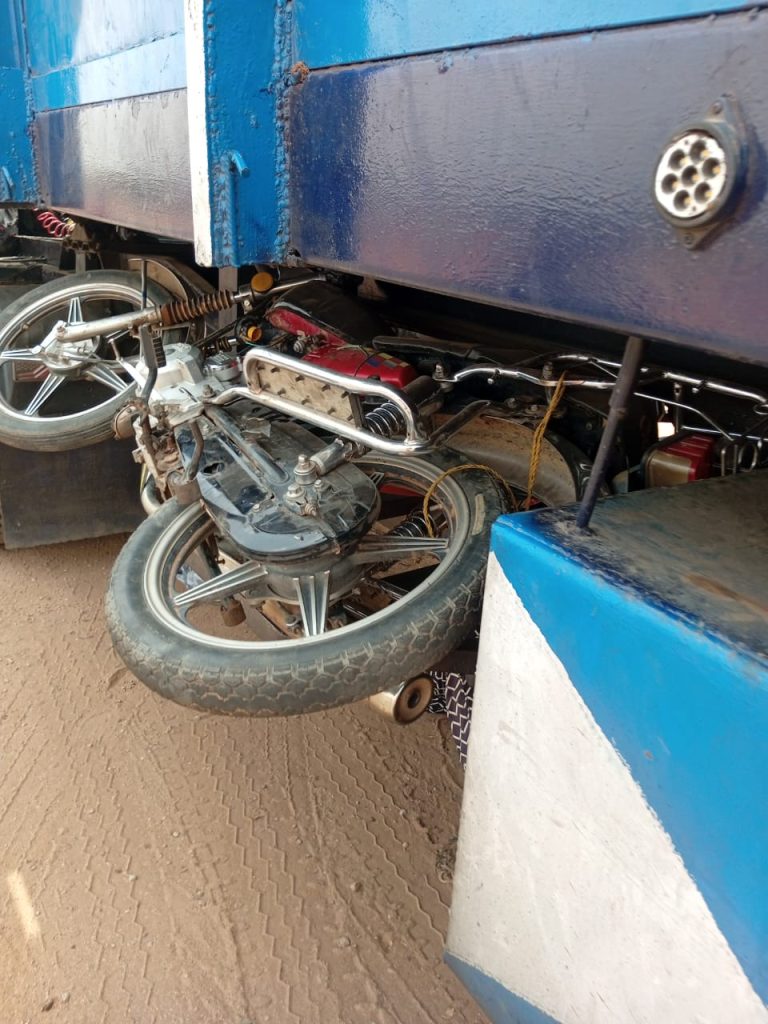
‘Crushed by Cargo’
The operation, led by Sector Commander Tijani Iliyasu, highlighted the extreme physical risks faced by those traveling in these conditions. According to the FRSC, in the event of sudden braking or crash:
- Crush Injuries: Passengers are frequently crushed by shifting heavy machinery or cargo.
- Livestock Hazards: Trapped commuters face a high risk of injury from panicked animals within the confined space.
- Vehicle Instability: The sheer weight and uneven distribution of “mixed loads” significantly weaken braking control and heighten the risk of a fatal rollover.
Analysis: A Cost-of-Living Crisis on the Road?
The prevalence of mixed loading in Nigeria is often driven by economic necessity. For many seasonal workers and traders, the cost of a seat in a commercial bus is prohibitive, leading them to pay lower fares to stow away in the back of long-haul lorries moving between the north and south.
However, the FRSC is now adopting a “zero-tolerance” stance. By activating a nationwide enforcement mandate during the high-traffic Easter period, the government is attempting to move beyond “public enlightenment” toward “stiff sanctions,” including the arrest and prosecution of drivers.
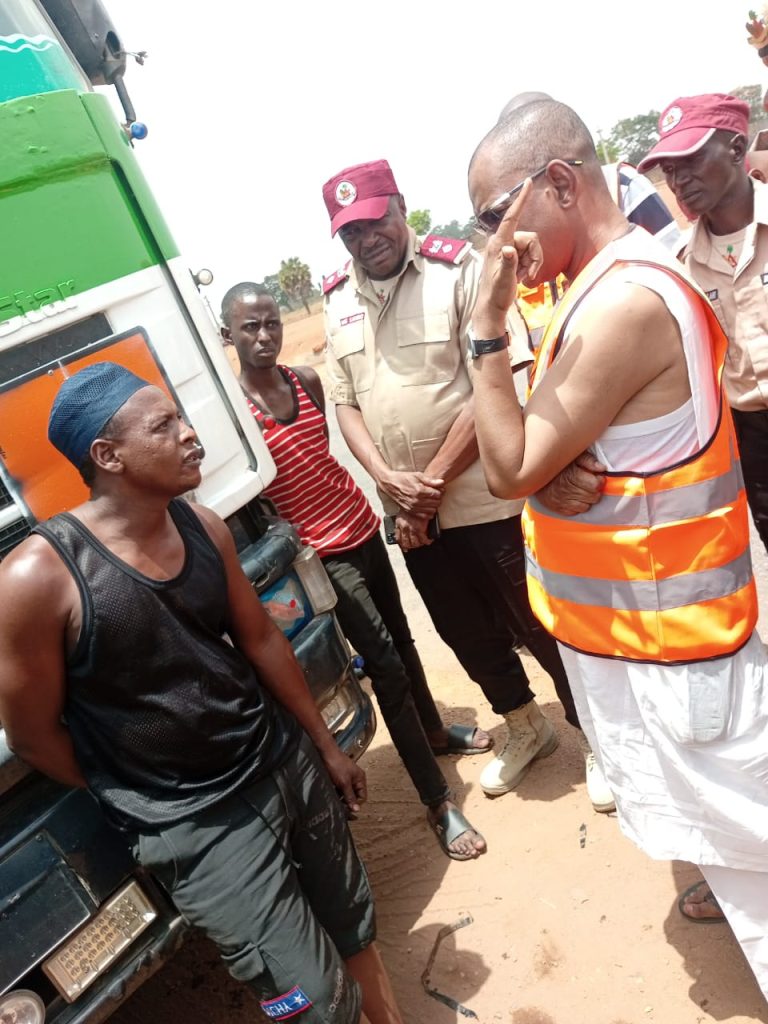
The ‘Intelligence-Driven’ Patrol
The Kaduna sector is a vital artery for Nigeria’s internal trade, linking the federal capital, Abuja, to the northern commercial hubs. By focusing enforcement on this specific corridor, the FRSC aims to disrupt the logistics of transport operators who routinely circumvent safety regulations.
As the Easter holiday concludes, the Corps Marshal has called on all “stakeholders”—from fleet owners to the passengers themselves—to recognize that safety is a “collective responsibility.” For now, the sight of a lorry packed with humans and cattle remains a common, if illegal, fixture of the Nigerian landscape, but the current “aggressive” patrols suggest the authorities are finally intent on defusing the “time bomb.”


Add Comment