
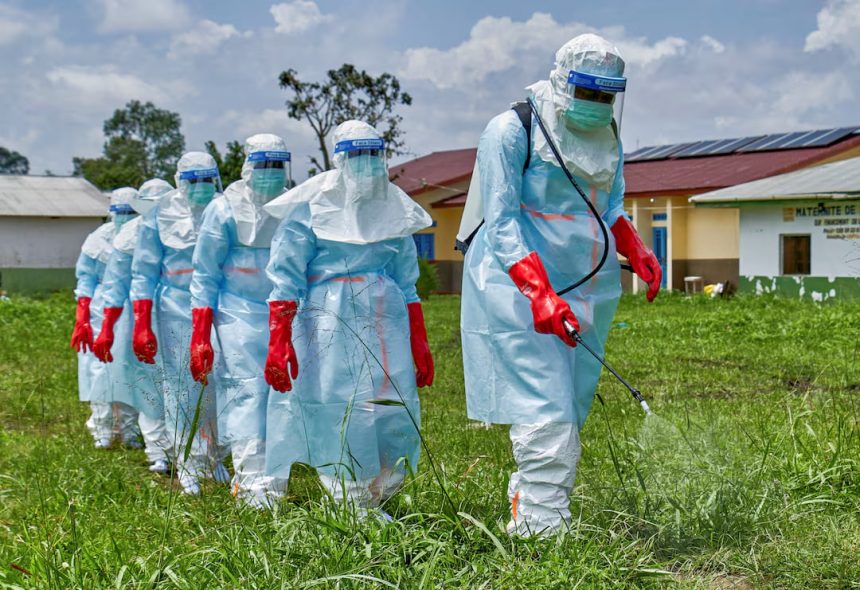

Health authorities in Nigeria have confirmed an imported case of the Ebola virus in the capital, Abuja, prompting a swift public health intervention to trace dozens of potential contacts.
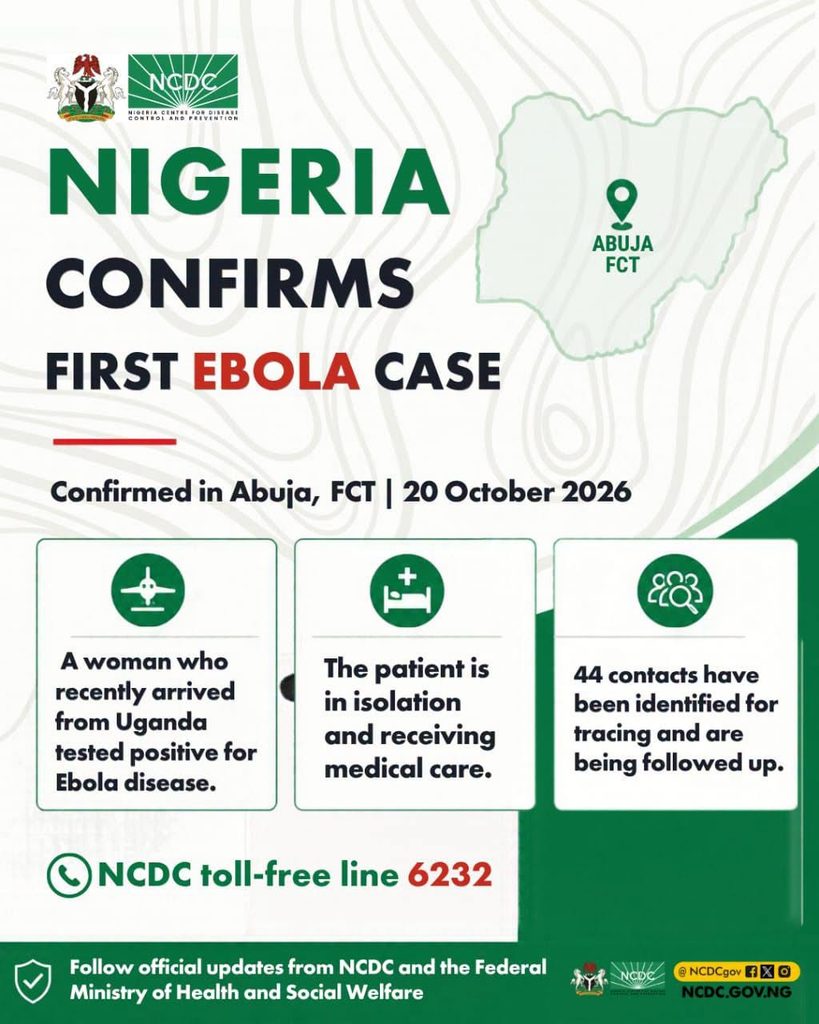
The Minister of Health and Social Welfare, Professor Ali Pate, announced on Tuesday that the infected patient—a woman who had recently returned from Uganda—began experiencing symptoms on 7 October.
She sought medical care at a private health facility in Abuja on 11 October, where her condition subsequently deteriorated. Diagnostic tests confirmed the Ebola virus infection on 20 October 2026.
The patient has been placed in an isolation facility and is currently receiving specialized care.
Contact tracing underway
Public health teams have launched an immediate contact-tracing operation to identify individuals who may have been exposed to the virus.
“Contact tracing has been conducted, and it’s underway as we speak, with 44 contacts already identified,” Prof Pate said.
The monitored individuals include healthcare professionals, hospital patients, family caregivers, and passengers who traveled on the same flight as the patient. The minister appealed to all identified contacts to fully cooperate with medical personnel and follow quarantine guidelines.
Regional response and coordination
The Federal Ministry of Health, the Nigeria Centre for Disease Control and Prevention (NCDC), and the Federal Capital Territory Health Secretariat are working alongside international partners, including the World Health Organization (WHO) and the Africa Centres for Disease Control and Prevention (Africa CDC), to contain potential spread.
The Africa CDC has urged international partners to bolster regional support as health officials work to prevent secondary transmission within Nigeria and across neighboring borders.



Add Comment