


A Nigerian political advocacy group has rejected claims by former presidential candidate Peter Obi that the country’s current fuel price hikes could have been avoided through the use of strategic oil reserves.
The Democratic Front (TDF) described the comments by Mr. Obi—the Labour Party’s candidate in the 2023 election—as a “display of ignorance” regarding global energy markets following recent escalations in the Middle East.
The row comes as global oil prices fluctuate following disruptions in the Strait of Hormuz, which have impacted energy costs from Europe to Asia.
The ‘Strategic Reserve’ debate
Mr. Obi had previously suggested that Nigeria’s vulnerability to international price shocks was a result of the government’s failure to maintain sufficient strategic petroleum reserves.
However, in a statement signed by Chairman Danjuma Muhammad and Secretary Chief Wale Adedayo, the TDF argued that reserves do not necessarily immunize a country against global market pricing.
“The fact that the United States and countries in Europe are worse hit by the fuel price hike than Nigeria, despite their huge strategic reserves, deconstructs the narrative,” the group stated.
The ‘Dangote Factor’
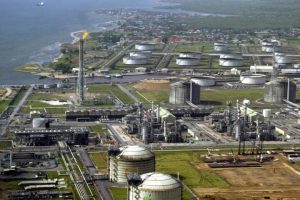
The TDF also disputed the claim that Nigeria lacks a storage buffer, pointing to the massive capacity of the country’s newest industrial landmark.
- Current Stocks: The group cited data showing the Dangote Refinery held 500 million litres of petroleum in its own strategic reserve as of March 1, 2026.
- Supply Stability: They argued that while prices have risen due to global dynamics, the refinery’s operations have prevented the “fuel queues” that historically paralyzed Nigerian cities during international crises.
“The international market pricing ensures that prices fluctuate,” the TDF noted, pointing out that while prices hit ₦1,450 per litre following the removal of fuel subsidies in 2023, they had dropped to ₦750 per litre in 2025 due to increased local refining capacity.
Petty politics or economic reality?
The exchange highlights the deep political divide in Nigeria over the administration’s “Renewed Hope” economic reforms. While opposition leaders like Mr. Obi argue the government has left citizens exposed to “economic shocks,” pro-government groups insist that the transition to a market-driven energy sector is the only long-term solution.
The TDF accused Mr. Obi of “flying blind” on global economics and using the Middle East crisis as an opportunity to play “petty politics.”
“Price volatility is not the only purpose for strategic reserves,” the group added. “Geopolitical pressures and energy security are factors, and in Nigeria’s case, the current situation has not forced the kind of supply disruption that Mr. Obi’s narrative suggests.”


Add Comment