
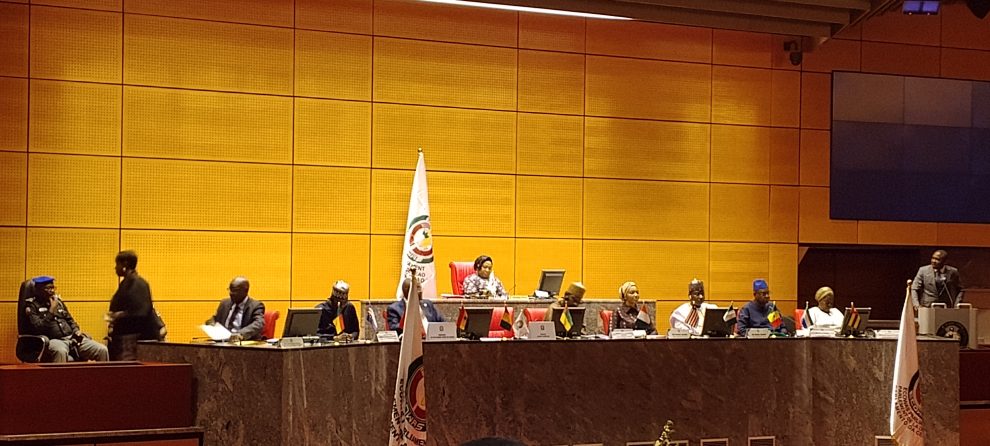

The Speaker of the ECOWAS Parliament, Mémounatou Ibrahima, has called for a “decisive turning point” in West African integration, urging lawmakers to transform the African Continental Free Trade Area (AfCFTA) from a series of protocols into a tangible engine for economic growth. Opening the first extraordinary session of 2026 in Abuja on Monday, she warned that while the region boasts a 5% average growth rate—the highest on the continent—intra-regional trade remains stubbornly below 10%. Mrs. Ibrahima challenged the assembly to lead the continent in industrialization, moving away from the export of raw materials like cocoa, cotton, and timber toward local processing and high-value production. She emphasized that with 400 million citizens, the region possesses a major demographic asset that must be harnessed through “concrete action” rather than mere declarations. The summit, themed around deepening integration through the AfCFTA, arrives at a critical juncture as the 15-member bloc faces both internal instability and global economic pressures. Nigerian Senate President Godswill Akpabio who was represented by the First Deputy Speaker of the Ecowas Parliament Jibrin Barau reinforced this message, telling delegates that the region must act as a “disciplined phalanx” to compete against global economic giants. He emphasized that current global protectionist trends leave West Africa vulnerable, noting that “survival does not belong to the isolated” and that dependence on distant supply chains surrenders regional resilience. Both leaders underscored that successful trade is impossible without regional stability, calling for renewed efforts to tackle terrorism and the “constitutional tremors” that have recently bruised the neighborhood’s democratic image.
The Challenge: Fragmentation and “Raw Potential”
The primary hurdle identified is a disconnect between West Africa’s vast resources and its actual economic output. Currently, the region’s industrial base is underdeveloped, leaving economies to compete with similar raw exports rather than complementing each other. This fragmentation is worsened by “administrative confusion” at borders, where traders are often stranded by inconsistent regulations or demands for bribes. Furthermore, persistent insecurity and constitutional disruptions create a climate where “trade withers” and investor confidence erodes.
The Solution: Legislative Resolve and Industrialization
To overcome these barriers, the parliamentarians outlined a 2026 roadmap focused on “legislative coherence” to ensure national laws do not contradict regional trade commitments. The solution lies in shifting from “exporting raw potential” to “refining minerals and processing cocoa” within the region to build local value chains.
Key technical fixes include: Harmonizing standards and customs procedures to ensure goods move from Lagos to Dakar without hindrance. Implementing digital tools like the Pan-African Payment and Settlement System (PAPSS) to simplify cross-border transactions. Strengthening security cooperation and intelligence sharing, recognizing that political stability and economic integration are “twin pillars” that must rise together.


Add Comment