
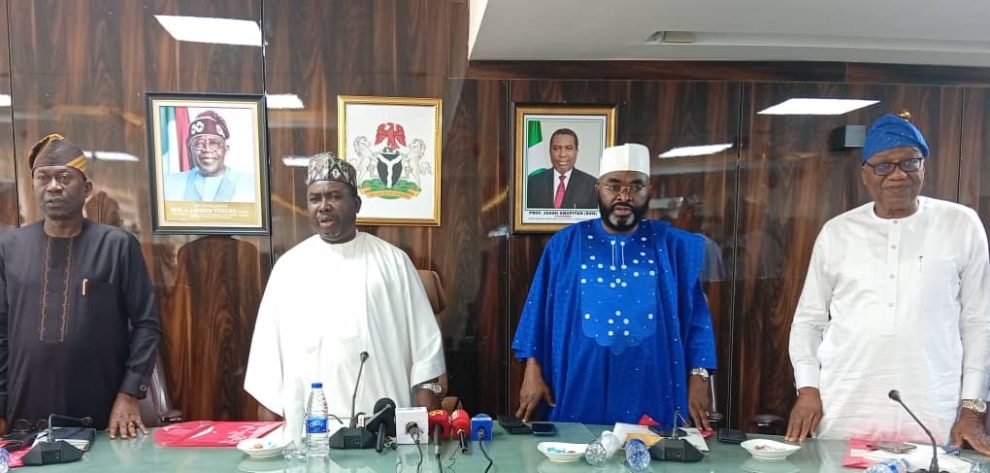

Nigeria’s electoral umpire has approved the registration of two new political parties, bringing the national total to 21, while issuing a stern warning to political leaders over internal infighting. The Independent National Electoral Commission (INEC) announced on Thursday that the Democratic Leadership Alliance (DLA) and the Nigeria Democratic Congress (NDC) have been formally recognised. The latter’s registration follows a federal court order.Speaking in the capital, Abuja, INEC Chairman Professor Joash Amupitan said the move comes at a “critical phase” as the country prepares for the 2027 General Election.
Deepening Disquiet Over Electoral Law
While the registration of new parties adds to the political landscape, a shadow has been cast over the 2027 preparations by the controversial status of the Electoral Act Amendment Bill 2026. Despite the House of Representatives passing a version that favored technological transparency, the Nigerian Senate is facing a wave of backlash from civil society groups. Activists and monitors allege that lawmakers have “systematically gutted” the bill during secret executive sessions, removing provisions seen as vital for a credible vote. Among the most contentious changes is the Senate’s rejection of mandatory electronic transmission of results. While the House version sought to make real-time uploads to the IReV portal a legal requirement, the Senate version reportedly leaves this to INEC’s “discretion”—a move critics say leaves the door open for manual result manipulation.
Key points of friction include:Electronic Transmission, rejection of mandatory real-time uploads from polling units;Voter ID:The Senate reportedly struck out a proposal to allow digital voter identification, insisting on the mandatory physical Permanent Voter Card (PVC); Litigation Timelines: A new clause (142) was removed that would have allowed parties to use certified documents in court without needing oral testimony—a move civil society groups say will clog the courts and delay justice; Campaign Finance-Concerns that the Senate has doubled campaign spending limits, effectively pricing out smaller parties and “monetizing” the 2027 contest.
Groups like Yiaga Africa and the Centre for Democracy and Development (CDD) have warned that these omissions could “re-legalize” the very loopholes that marred the 2023 elections. “INEC needs legal clarity, not legislative ambiguity,” one activist noted, stressing that the delay in harmonizing the law is leaving the commission “to prepare in the dark.”
The Executive Director of YIAGA Africa, Samson Itodo speaking on Arise Tv said the Senate rejecting real-time electronic transmission of election results is a dangerous retreat. Mr. Itodo went further to say the Senate has betrayed the trust of Nigerians and made rubbish of all the gains made. He described the move as a dangerous retreat from some of the lofty reforms that were introduced by the 2022 Electoral Act.
A warning on ‘leadership crises‘
Amidst this legislative uncertainty, Prof Amupitan expressed deep concern over the “persistent leadership disputes” currently rocking several established parties. He warned that frequent legal battles over party control are a genuine threat to the stability of Nigeria’s democracy.” Such disputes create uncertainty among supporters and erode public confidence in the political system,” the Chairman told party leaders at the consultative meeting.
Upcoming Electoral Milestones
As the 2027 roadmap takes shape, several “off-cycle” elections are set to test the country’s readiness under the existing framework: 21 February 2026: FCT Area Council elections (1.68 million voters expected).
20 June 2026: Ekiti State Governorship election.
8 August 2026: Osun State Governorship election.
Tackling Voter Apathy
One of the most pressing issues raised was the sharp decline in voter participation. Statistics show that turnout for presidential elections has plummeted from 53.7% in 2011 to just 26.7% in 2023. While Prof Amupitan credited the Bimodal Voter Accreditation System (BVAS) with eliminating “ghost voting,” he insisted that technology alone cannot fix the problem. To bolster integrity, INEC confirmed it will soon launch a nationwide Voter Revalidation Exercise to purge duplicate entries and the names of deceased persons from the register.
Responding to the developments, Yusuf Dantalle, chairman of the Inter-Party Advisory Council (IPAC), urged the National Assembly to speed up the harmonization of the legal framework. “Time is of the essence,” he warned, as the country moves closer to the 2027 General Election.


Add Comment