

The European Union has announced a major humanitarian aid package for Africa, with a specific focus on Nigeria’s crisis-hit North-West, even as other global donors begin to pull back funding.
The allocation is part of a wider €1.9bn (£1.6bn) global humanitarian budget for 2026 unveiled by the European Commission on Wednesday. Of this, €557m has been ring-fenced for West and Central Africa, the Sahel, and the Lake Chad basin.
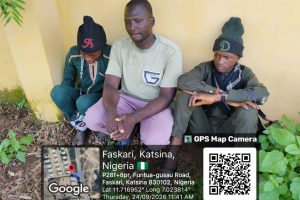
The move comes at a critical time for Nigeria, where the North-West region has been destabilised by years of banditry, kidnapping, and displacement, leading to what aid agencies describe as a “silent emergency.”
Closing the ‘funding gap’
The EU’s announcement coincides with the World Economic Forum in Davos, Switzerland, where European Commissioner Hadja Lahbib is meeting with business leaders to plead for private sector intervention.
With 239 million people worldwide now in need of assistance, the UN and other international bodies have warned that public tax-funded aid is no longer enough to meet the scale of global displacement and hunger.
“The humanitarian system is under unprecedented strain, and public funding alone will not meet the scale of the crisis,” Commissioner Lahbib said. “That’s why I’m in Davos: to mobilise the private sector to think bigger, move faster, and act together.”
Where the money will go
The initial €1.9bn budget is spread across several global “hotspots,” reflecting a world increasingly fractured by conflict:
- Africa (€557m): Targeting the Sahel and North-West Nigeria to provide emergency food, shelter, and critical healthcare.
- The Middle East (€448m): Focusing on Gaza following last year’s fragile ceasefire, as well as Yemen and Syria.
- Ukraine (€145m): As the Russian invasion enters its fourth year, with an additional €8m for neighbouring Moldova.
- Asia & Latin America: Significant funds are also allocated to Afghanistan (€126m) and the ongoing Myanmar crisis.
A ‘principled’ stance
The EU has long been the world’s leading humanitarian donor. However, the 2026 budget arrives as many Western nations face domestic pressure to cut foreign spending.
By committing nearly €2bn at the start of the year, Brussels is attempting to signal stability in a volatile aid landscape. The funding will be channeled through NGOs, UN agencies, and specialised member state organisations rather than directly to governments, to ensure the aid reaches the most vulnerable “wherever they are.”
In Nigeria, the focus on the North-West is particularly significant. While the North-East has traditionally received the lion’s share of international aid due to the Boko Haram insurgency, the humanitarian fallout from banditry in states like Zamfara and Katsina has recently reached comparable levels of severity.

Add Comment