
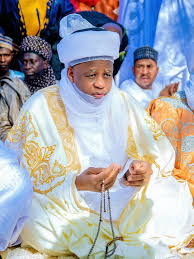

Nigeria has officially declared Friday, 20 March 2026, as the day for Eid-el-Fitr, marking the conclusion of the Islamic holy month of Ramadan.
The announcement was made by the Sultanate Council in Sokoto after the crescent moon of Shawwal—the month following Ramadan—was not sighted on Wednesday evening. Under the Islamic lunar calendar, if the moon is not spotted on the 29th day, the fasting month is automatically extended to 30 days.
The Sultan of Sokoto, Muhammad Sa’ad Abubakar, who leads the Nigerian Supreme Council for Islamic Affairs, urged the country’s Muslim population to use the period to pray for national peace and sustained spiritual growth.
The search for the crescent
The determination of Eid is a highly anticipated event across the Muslim world, rooted in the teachings of the Prophet Muhammad. In Nigeria, a vast network of moon-sighting committees monitors the skies across all 36 states to ensure a unified start to the festivities.
As the moon remained elusive on Wednesday, Thursday will serve as the final day of fasting. The Federal Government had already anticipated the window for the celebration, declaring both Thursday and Friday as public holidays to allow for travel and family gatherings.
Massive security operation
Authorities in Africa’s most populous nation have launched a significant security exercise to ensure the celebrations remain peaceful. The Nigeria Security and Civil Defence Corps (NSCDC) alone has deployed over 53,500 personnel to safeguard critical infrastructure and public spaces.
Police commands across the federation have also mobilized thousands of officers, with a specific focus on:
- Prayer Grounds & Mosques: Ensuring safety during the large outdoor Eid prayers.
- Transport Hubs: Managing the surge in travelers at motor parks and highways.
- Public Spaces: Monitoring shopping malls and recreation centers to prevent petty crimes like phone snatching.
Regional traditions and restrictions
In northern Nigeria, where the traditional “Hawan Durbar” (a colorful horse parade) is a cultural staple, security measures are particularly tight.
In Katsina State, police have collaborated with the Durbar organizing committee to ban the participation of “Yan Tauri”—traditional fighters—and have prohibited the carrying of any dangerous weapons like knives or swords during the festivities. Similarly, in Kaduna, authorities have strictly banned the use of fireworks and “knockouts” to prevent public panic and potential fire hazards.
As the “Confluence of Cultures” prepares to celebrate, the focus remains on a “seamless and hitch-free” festival, with security agencies urging citizens to report any suspicious movements as they gather for the “Day of Eid.”



Add Comment