
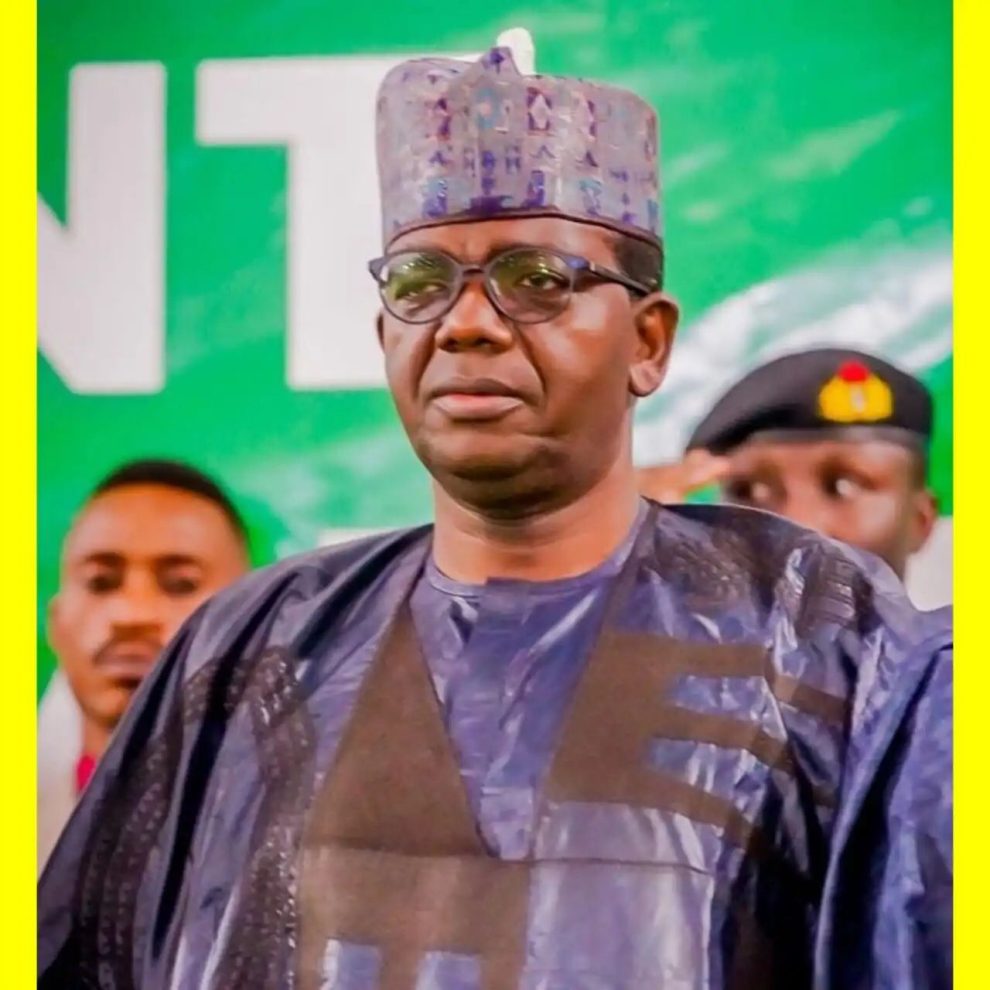

Nigeria’s Minister of State for Defence, Bello Matawalle, has thrown down the political gauntlet, predicting a “convincing” victory for President Bola Tinubu in the 2027 elections. The bold endorsement, delivered from his Abuja residence on Saturday, comes at a time when the administration’s sweeping “Renewed Hope” reforms have left the country’s 200 million citizens caught between a projected macroeconomic recovery and a biting cost-of-living crisis.
The Minister’s Mandate
In a statement that felt more like a campaign launch than a ministerial update, Mr. Matawalle urged Nigerians to grant the President the “political space” needed to conclude his economic overhaul.”President Tinubu has taken bold steps to stabilise the economy,” Matawalle argued, dismissing opposition manoeuvres as “self-serving and myopic.” He warned that premature power struggles would only distract from a reform agenda he believes is finally yielding results, particularly in the North.
Analysis: A “Fiscal Reset” with a Human Cost
While the Minister paints a picture of inevitable electoral success, the reality on the ground in 2026 remains a complex tapestry of “painful adjustments.”
1. The Economy: Growth vs. The Street
On paper, the Tinubu administration is winning. The International Monetary Fund (IMF) recently revised Nigeria’s 2026 growth projection to 4.4%, the highest in nearly two decades. Central Bank data suggests inflation has finally cooled to roughly 15%, down from the staggering 34% highs of late 2024. However, for the average Nigerian, these figures are abstract. The “fiscal reset” mentioned in recent State House briefings was triggered by two seismic shifts:The Subsidy Axe: The removal of fuel subsidies in 2023 sent transport and food costs into a tailspin from which many households are still reeling. The Naira’s Fall: The unification of the exchange rate led to a massive devaluation. While this helped achieve a trade surplus and attract foreign investment (FDI rose to $720 million in Q3 2025), it also decimated the purchasing power of the middle class.
2. Taxation: The 2026 Gamble
The administration’s new Tax Act, which comes into full effect this year, is perhaps its most ambitious—and controversial—play.
The Carrot: The government has exempted anyone earning less than ₦800,000 annually from personal income tax, offering “breathing room” to low-income earners.
The Stick: To fund the state, a new 4% development levy has been introduced for larger businesses, and corporate tax structures have been tightened. Critics argue that while the poor are spared direct tax, the “hidden tax” of high energy prices continues to act as a regressive burden.
3. The Cost of Living Crisis. Despite the “disinflation” trend, the cost-of-living crisis remains the administration’s Achilles’ heel. While food inflation has dipped to 10.8% in some regions, staples like garri and rice remain significantly more expensive than when Tinubu took office in 2023. The disconnect between the “robust GDP growth” celebrated in Abuja and the empty pots in Lagos and Kano will likely be the primary battleground for 2027.
The Verdict
Mr. Matawalle’s confidence reflects an administration that believes it has already survived the “worst of the storm.” By 2027, the government bets that the “Renewed Hope” infrastructure projects and a more stable Naira will have translated into tangible prosperity. But as any veteran of Nigerian politics knows, three years is an eternity. If the “tangible improvements” promised for 2026 do not reach the dinner table soon, the “convincing victory” Matawalle predicts may face a much stiffer challenge from a public weary of “patience and fiscal discipline.”


Add Comment