
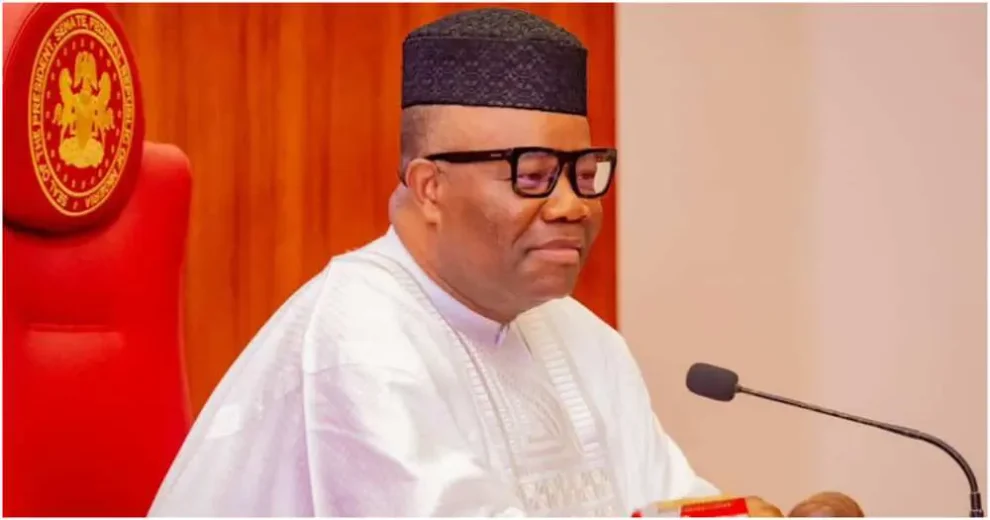

The Nigerian Senate has appointed a seven-member committee to fast-track a major overhaul of the country’s election laws, in a move aimed at ending “result falsification” and vote-buying ahead of the 2027 polls.
The move follows a three-hour “secret” session on Thursday where senators debated the controversial Electoral Act (Repeal and Enactment) Bill. The new committee, led by Senator Niyi Adegbonmire, has been given just three days to harmonise different views before a final vote on Tuesday.
Senate President Godswill Akpabio said the delay in passing the bill was necessary to ensure “due diligence,” warning that any mistakes could lead to a wave of legal challenges in the election tribunals.
Prison voting and digital cards
The proposed law introduces some of the most radical changes to Nigerian democracy in decades. Key features of the bill include:
- Prisoners’ Rights: For the first time, the electoral body, INEC, would be mandated to register and allow eligible inmates to vote.
- Digital IDs: Introduction of a downloadable voter card with a unique QR code to prevent identity theft.
- Electronic Results: Mandatory electronic transmission of results directly from polling units to a central portal.
- Early Funding: A new requirement that all election funds must be released to INEC at least one year before the first vote is cast.
War on vote-buying
In a bid to curb the “money politics” that has long plagued Nigerian elections, the bill introduces much stiffer penalties. Candidates or officials caught buying votes or falsifying results could face:
- Fines: Up to N5m ($3,100).
- Jail Time: A two-year prison sentence.
- Political Ban: A 10-year prohibition from contesting any public office.
“We must take our time to ensure justice is done to all,” Mr Akpabio told colleagues, stressing that the bill is a “very important” piece of legislation for national stability.
The hurdle ahead
While the House of Representatives has already passed its version of the bill, the Senate’s approval is only the next step. Because the bill affects the “ground rules” of democracy, it must also be approved by at least two-thirds of the 36 State Houses of Assembly before it can be sent to President Bola Tinubu for his signature.
Analysis: A race against the clock
By Segun Ojumu, Africa Eye News
The Nigerian Senate is clearly feeling the pressure. By setting a 72-hour deadline for this committee, they are trying to signal that they are serious about reform. The inclusion of electronic result transmission is the “big one”—it was the main point of contention during the 2023 elections.
However, the real test will be the “prison vote” and the “QR code” cards. In a country where logistics are often a nightmare, critics are already asking if INEC can handle the complexity of registering thousands of inmates or managing a digital-only voter ID system. If the Senate gets this right, it could be a legacy-defining moment for Akpabio’s leadership.



Add Comment