
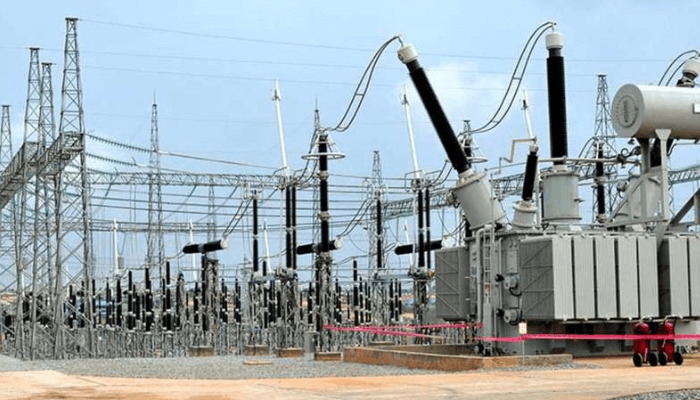

Nigeria’s electricity network has suffered its second total system collapse in less than a week, leaving the country in a near-total blackout and raising urgent questions about the stability of the national infrastructure.
The grid failed at 10:48 local time on Tuesday morning. Data from the Nigerian Independent System Operator showed that power generation plummeted from a morning peak of 4,762 megawatts (MW) to just 39MW within an hour.
This latest failure comes just four days after a similar collapse on Friday, 23 January, marking a turbulent start to 2026 for Africa’s most populous nation.
A ‘zero power’ situation
The impact of the collapse was immediate across the country’s 11 electricity distribution companies (DisCos). In the commercial hub of Lagos, EkoDisCo informed its customers that the “system disturbance” had resulted in a total loss of supply across its network.
By midday on Tuesday, load allocation to all distribution companies stood at 0.00MW, meaning that not a single watt of electricity was being delivered to households or businesses from the national grid.
Three collapses in a month
The frequency of these “system-wide disturbances” has alarmed energy experts. Including a failure on 29 December 2025, Nigeria has now recorded three major grid collapses in less than 30 days.
The Nigerian Independent System Operator confirmed that the failures were caused by the “simultaneous tripping” of several high-voltage 330kV transmission lines. When these critical lines fail, it creates a cascading effect that forces power plants to shut down to avoid permanent damage to the turbines.
Why does this keep happening?
While the government has recently taken delivery of nearly one million smart meters to improve billing, the “backbone” of the system—the transmission lines—remains fragile.
Industry analysts point to several persistent factors:
- Infrastructure Age: Many of the 330kV lines are decades old and prone to snapping or short-circuiting under heavy load.
- Lack of Spinning Reserve: The grid lacks enough “backup” power that can be injected instantly when a plant or line fails.
- Gas Supply Issues: Many of Nigeria’s 23 power plants rely on gas, and disruptions in the pipeline network can cause sudden drops in generation that unbalance the entire system.
The economic toll
The recurring blackouts come at a difficult time for the Nigerian economy. Businesses, already struggling with the high cost of fuel for private generators, are finding it increasingly difficult to plan production cycles around an “unpredictable” national grid.
Engineers from the Transmission Company of Nigeria (TCN) are currently working to restore the system, a process that usually begins by powering up hydro-electric dams in the north before gradually reconnecting the gas-fired plants in the south.




Add Comment