

Authorities in Nigeria’s central Kogi State have deployed advanced surveillance drones to track kidnappers and bandits in a move to secure the strategic “bridge” between the country’s north and south.
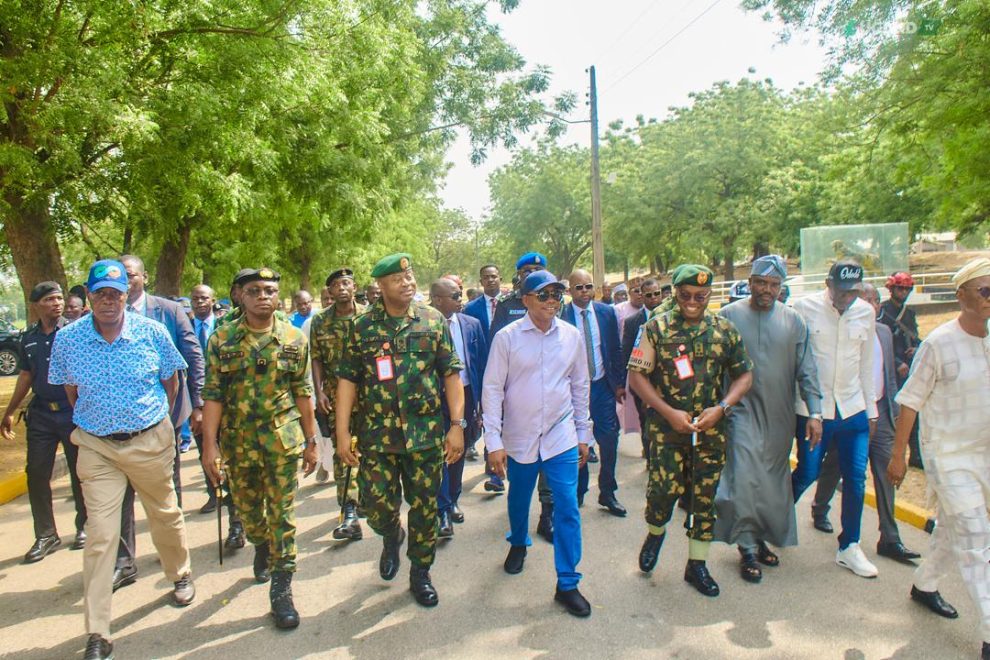
Governor Ahmed Usman Ododo unveiled the “PH20” unmanned aerial vehicles (UAVs) on Monday at the 12 Brigade military headquarters in Lokoja. The move comes as criminal gangs, displaced by military offensives in other parts of Nigeria, increasingly attempt to hide in Kogi’s vast, rugged forests.
The state is considered critical to national security because it borders ten other states and serves as the primary transit corridor for thousands of vehicles travelling between the federal capital, Abuja, and the southern ports.
‘No hiding place’
The new drones are designed to “penetrate” difficult terrain and forested hideouts that have previously been used by kidnapping syndicates.
According to the state government, the technology will provide:
- Real-time Intelligence: Early detection of suspicious movements in remote border areas.
- Terrain Mapping: Detailed digital surveillance of forest corridors used by bandits.
- Precision Strikes: Data-sharing with ground troops to allow for faster, targeted raids.
“These drones provide early detection… with this investment, criminals will have no hiding place,” Governor Ododo declared, adding that his administration would not negotiate with “terrorists.”
A community-led security model
While the drones represent the “high-tech” side of the strategy, the state has also bolstered its “boots on the ground.” In an unusual move, the government has formally absorbed over 2,700 local vigilantes into the civil service to ensure they are paid regular salaries and held to professional standards.
Local hunters, who possess intimate knowledge of the bush, have also been recruited across 21 local government areas to support the army and police in “clearance operations.”
Closing the ‘intelligence gap’
Security experts note that Kogi’s geography has often been exploited by criminals who strike and then vanish across state lines. State Security Adviser Jerry Omodara confirmed that operators had undergone three months of specialised training to bridge this “intelligence gap.”
The Nigerian Army has praised the initiative, noting that it complements President Bola Tinubu’s national directive to use technology to reduce casualties among security forces.
The Ohinoyi of Ebiraland, a prominent traditional ruler, pledged the support of local communities, who often act as the “eyes and ears” for the drone operators by providing the initial tips that trigger aerial surveillance.




Add Comment